Which Pistachios for Baklava and Kunafa? A Production Buyer's Guide
In a sweets workshop, pistachio is both the most visible ingredient and one of the most expensive. Buying one grade for everything wastes money on the inside of the tray and short-changes the top.
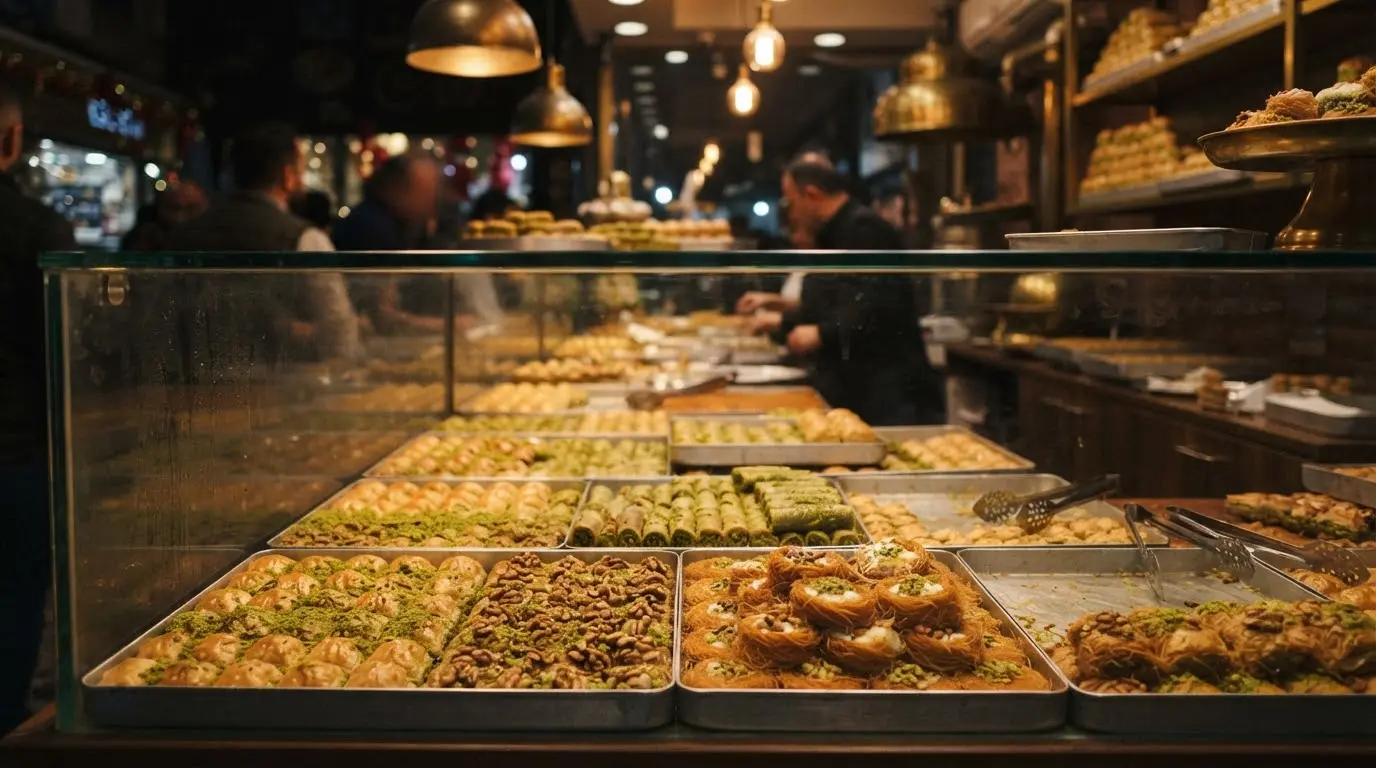
A baklava tray has two jobs for pistachio. Inside, the filling needs flavour and texture; nobody sees its colour once the pastry is cut. On top, the pistachio is the first thing a customer sees in the display, and it decides whether the tray looks premium or ordinary. Treat those as two different purchases and the arithmetic changes.
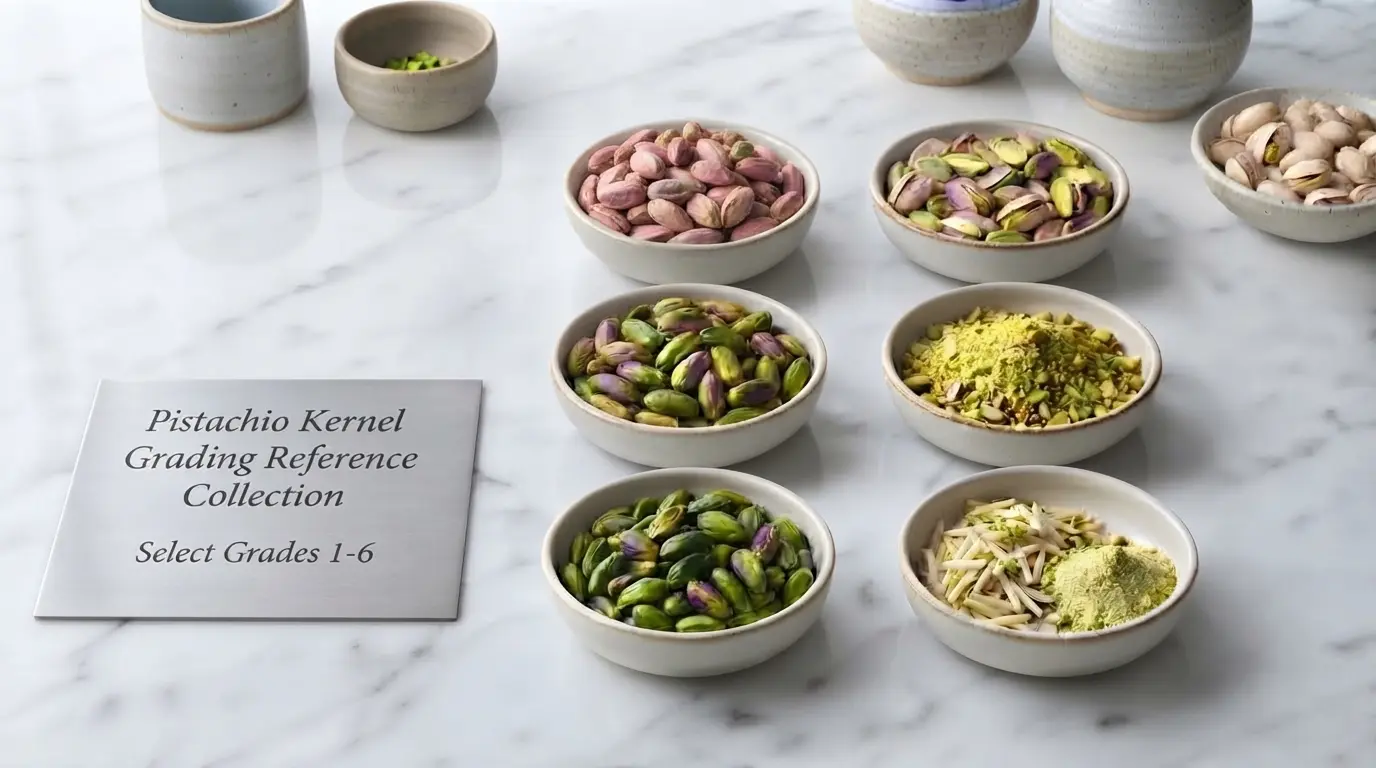
This guide works through the main Arab sweets one by one. For the kernel grades themselves, see green pistachio kernels in bulk.
Sweet by sweet: what to buy
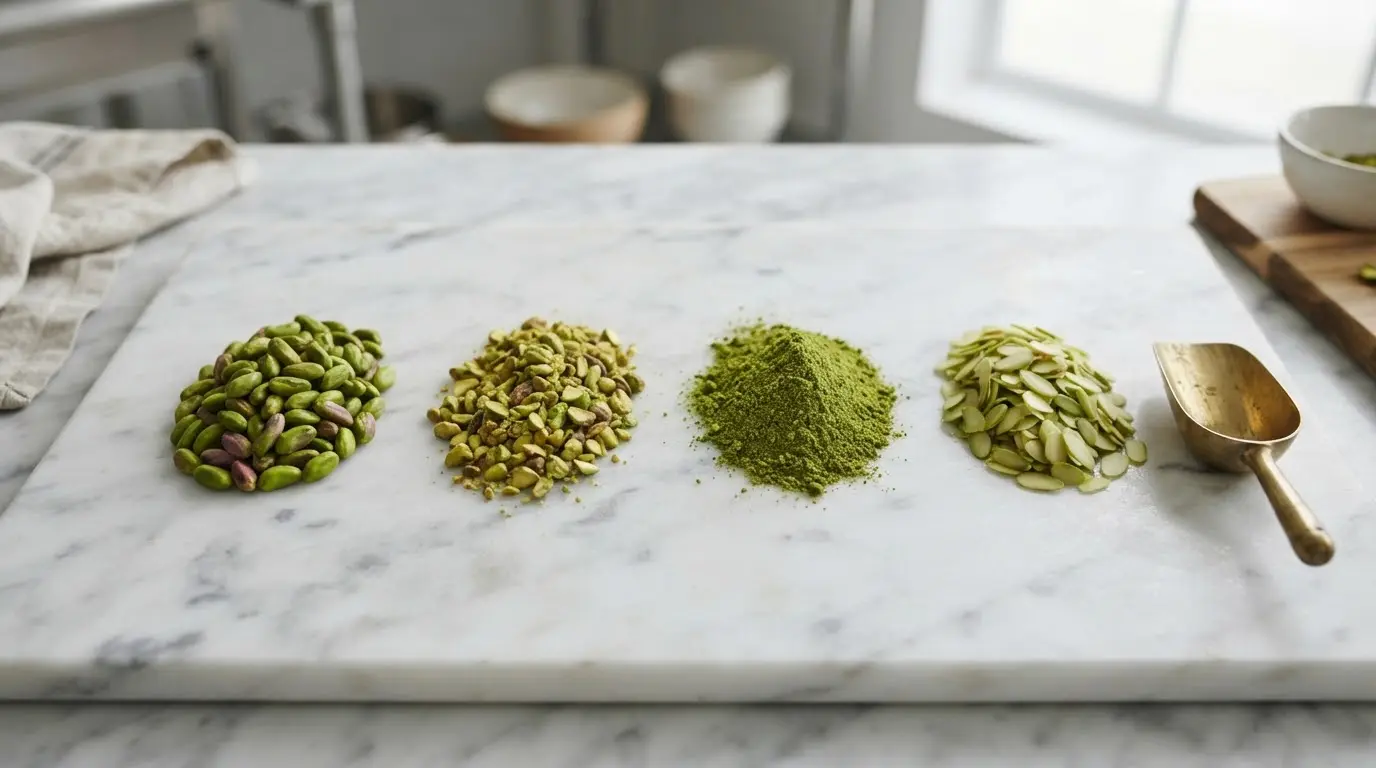
Pistachio grade and cut by product
Product | Usual cut | What to watch |
|---|---|---|
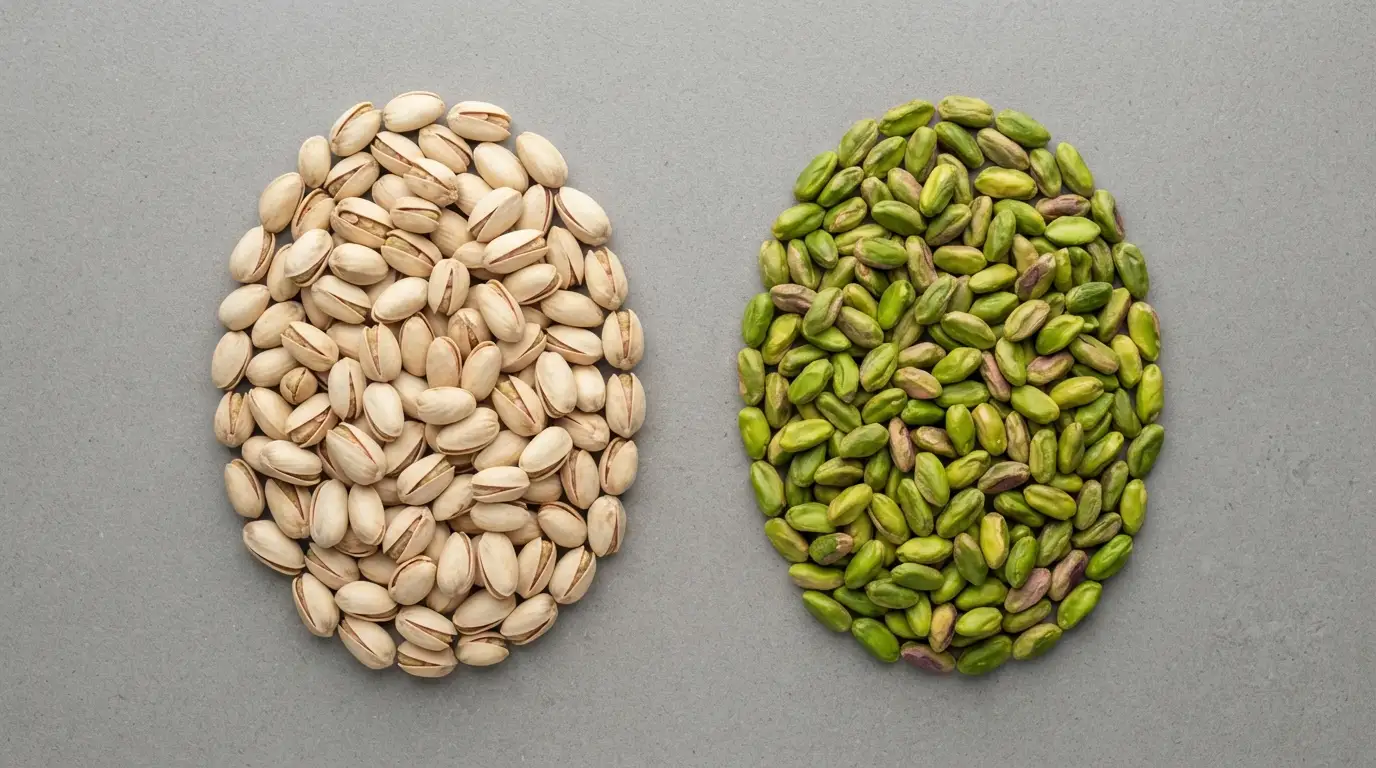
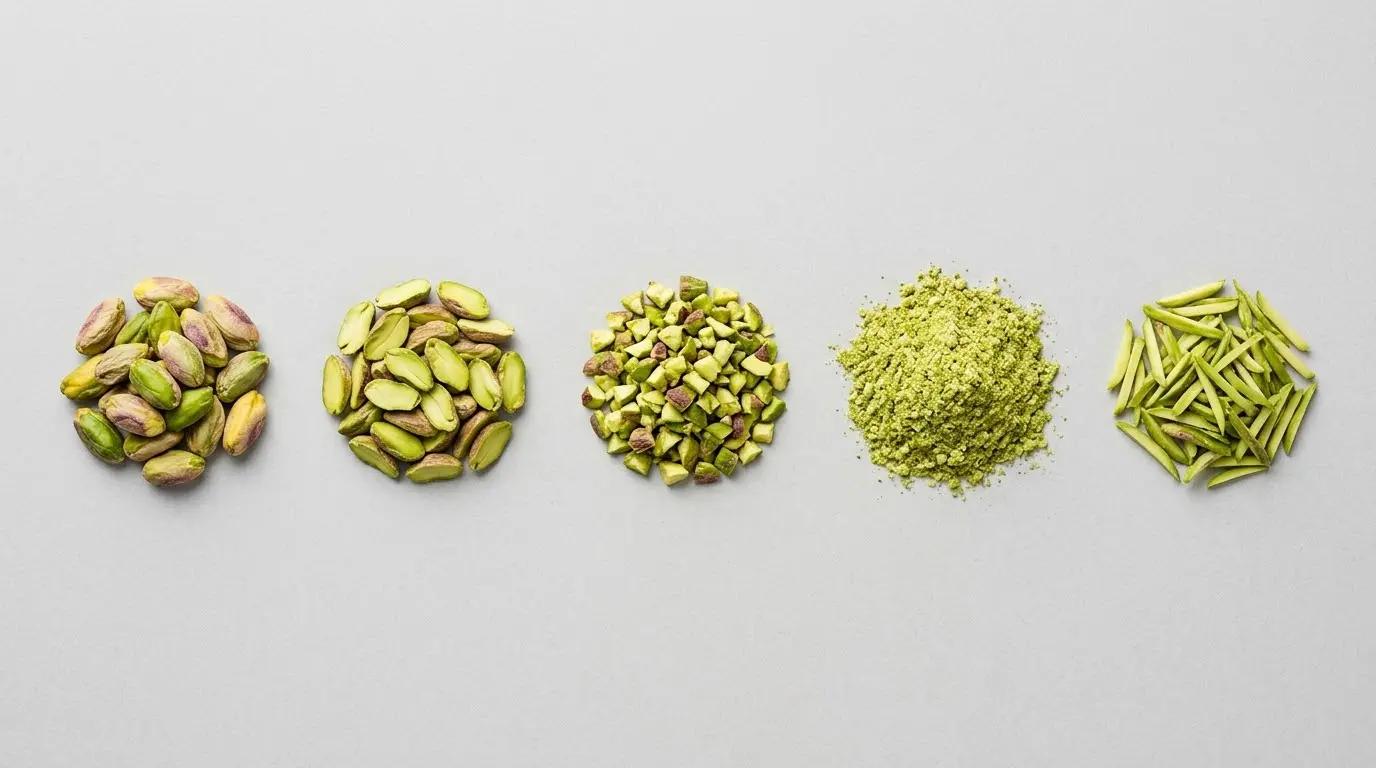
Baklava — filling | Coarsely chopped kernel or pieces | Flavour and oil content matter more than colour; peeled halves or pieces keep cost down. |
Baklava — topping | Fine or medium ground green kernel | Colour is everything; the deeper the starting green, the more survives the oven. |
Kunafa | Ground green kernel, sometimes coarse | A consistent grind gives an even green layer; clumps show up immediately. |
Maamoul | Coarsely chopped kernel | Texture in the bite; skin-on kernel is acceptable where colour is hidden. |
Borma / balloriyeh | Whole green peeled kernels | Whole-kernel percentage matters — broken kernels spoil the cut face. |
Ice cream / booza | Paste or powder for the base, pieces for inclusion | Premium colour for the base; cheaper pieces for mixing in. |
Cake and dessert decoration | Slivers (mabshour) | Uniform slivers; fragile, so buy in quantities you will use quickly. |
Colour and the oven
Heat dulls the green of a pistachio. That is why the topping on a baked tray is usually added after baking or near the end, and why workshops that sell on appearance pay more for intensely green kernels on top. Early-picked kernel starts with the most chlorophyll, so more green is left after the oven; ordinary peeled kernel works well where the pistachio is added after baking, as on kunafa.
Whatever you choose, judge the kernel in your own product, baked in your own oven. A sample that looks bright in the bag can look very different after twenty minutes at baking temperature.
Controlling cost per tray
The most common saving in a sweets workshop is not a cheaper supplier. It is a smarter split: premium green only where it is seen, and a cheaper grade where it is not.
Filling: peeled halves or pieces instead of whole kernels — the customer cannot tell once it is chopped.
Topping: your best green, ground to a consistent size, used sparingly but evenly.
Whole-kernel products (borma, mabroumeh): pay for a high whole-kernel percentage; broken pieces here are wasted money.
Grind in-house or buy ground? Buying ground saves labour but shortens shelf life; grinding in-house from whole or halves keeps the product fresher. Which format suits you is covered in ground vs slivered pistachios.
Buying for Ramadan and the Eid season
Kunafa, qatayef and baklava demand peaks in Ramadan and around Eid, and so does pistachio demand from every workshop in the region at once. Secure your kernel before the rush, agree colour against a retained sample, and schedule deliveries in two or three parts rather than one large lot — green kernel keeps its colour best when it is not stored for months.
Why the price of the same grade can differ from one offer to the next is explained in what sets the wholesale price of pistachios.
Questions buyers ask
Which pistachio is best for baklava?
Use two grades: coarsely chopped kernel or peeled pieces for the filling, where colour is hidden, and your greenest ground kernel for the topping, where it is seen. This keeps cost down without making the tray look ordinary.
Which pistachio should I use for kunafa?
Ground green peeled kernel, with a consistent grind so the topping forms an even layer. Because it is usually added after baking, ordinary green peeled kernel performs well.
Does baking change the colour of pistachio?
Yes. Heat dulls the green. The more intense the starting green, the more colour remains after baking, which is why premium workshops pay more for early-picked kernel on baked products.
Is it better to buy ground pistachio or grind it myself?
Buying ground saves labour but the powder oxidises faster. Grinding in-house from whole kernels or halves keeps the product fresher, so buy ground only in quantities you will use quickly.
How much pistachio should a sweets workshop order before Ramadan?
Base it on last season usage plus expected growth, then split deliveries into two or three parts so the kernel does not sit in storage for months and lose colour.
Tell us what you make.
Send us your product list and monthly volumes and we will propose a grade for each use. See our pistachio kernels or request samples.