Ground, Slivered or Chopped: Choosing a Pistachio Kernel Format
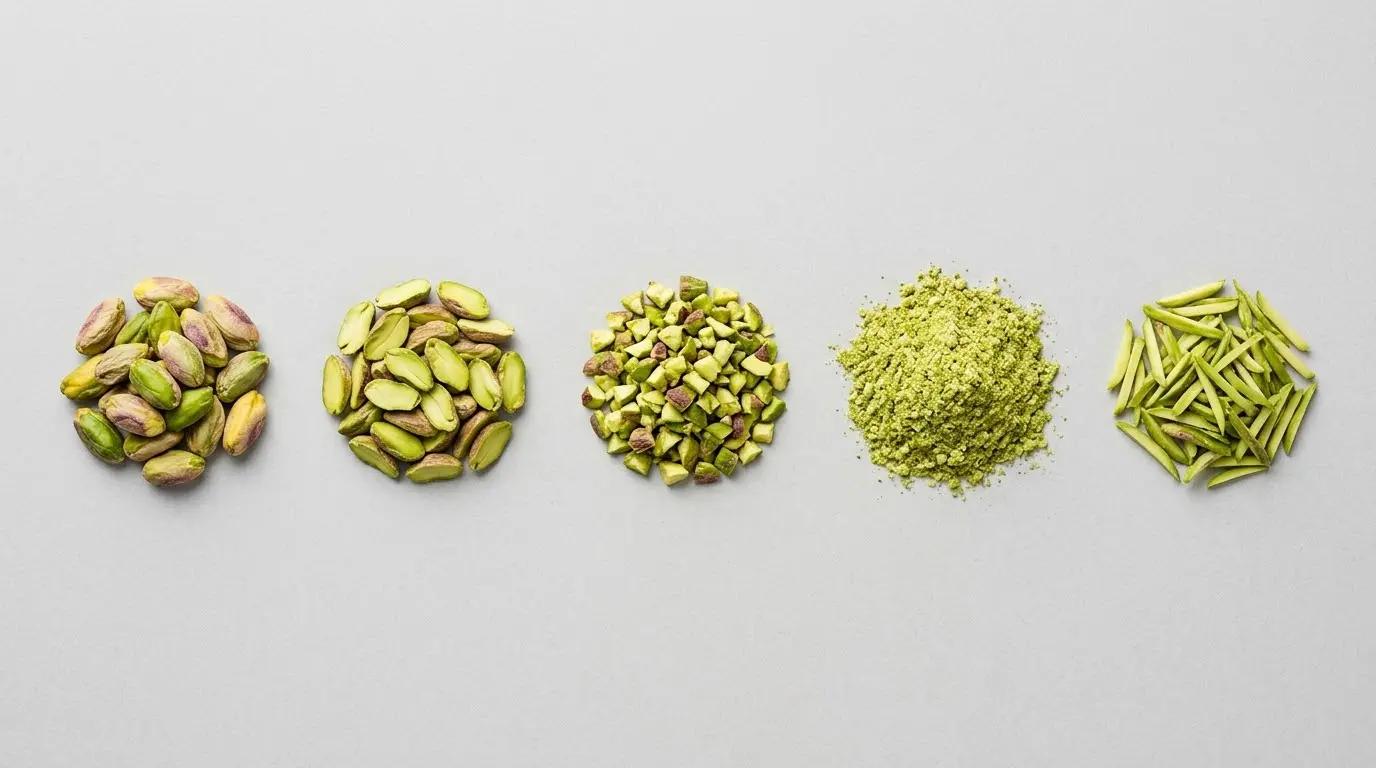
Two cartons can hold the same green kernel from the same lot and still be very different products. What the kernel was cut into decides where it can be used, how long it lasts and what it should cost.
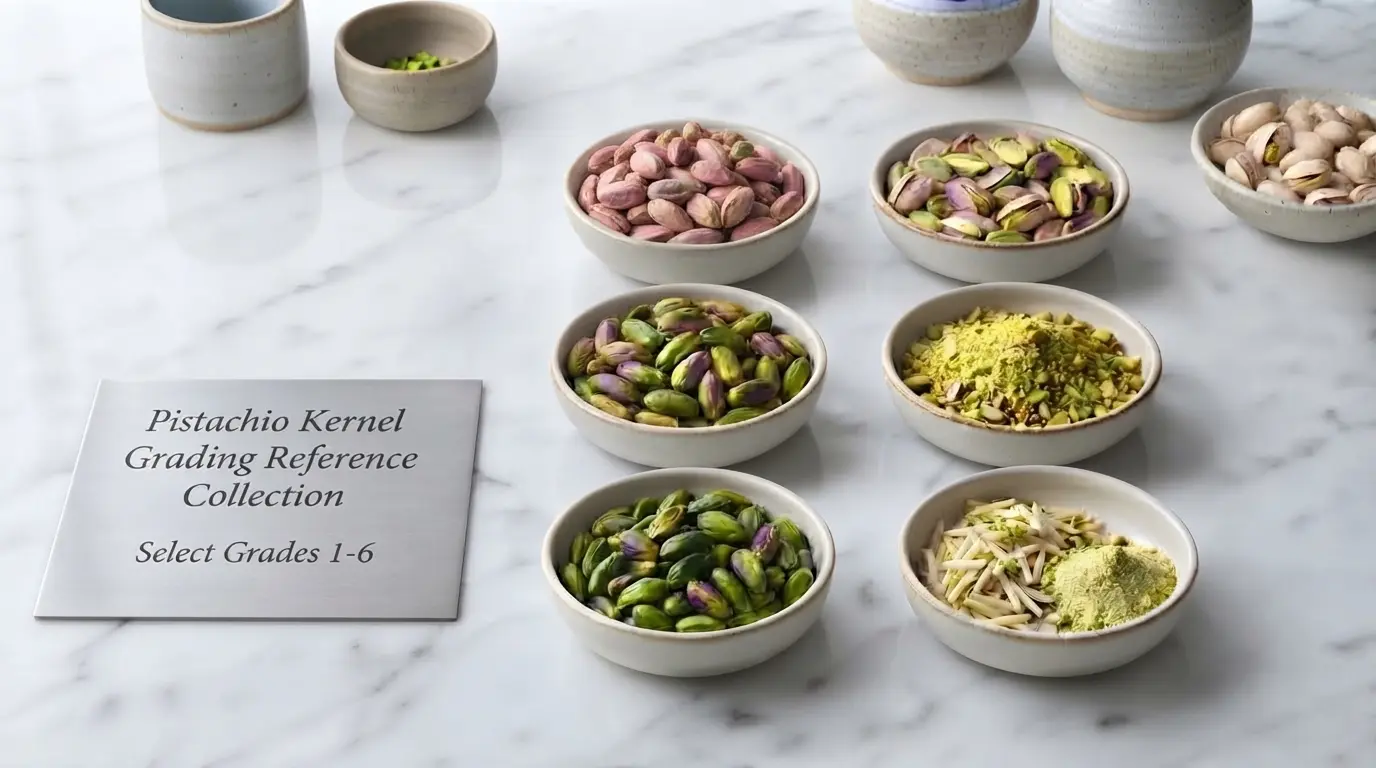
A pastry chef orders "green pistachio" and receives powder when she needed slivers for the edge of a cake. Nothing is wrong with the powder. It is simply the wrong format. Kernel buyers specify grade and colour carefully — see green pistachio kernels in bulk — and then leave the cut to chance.
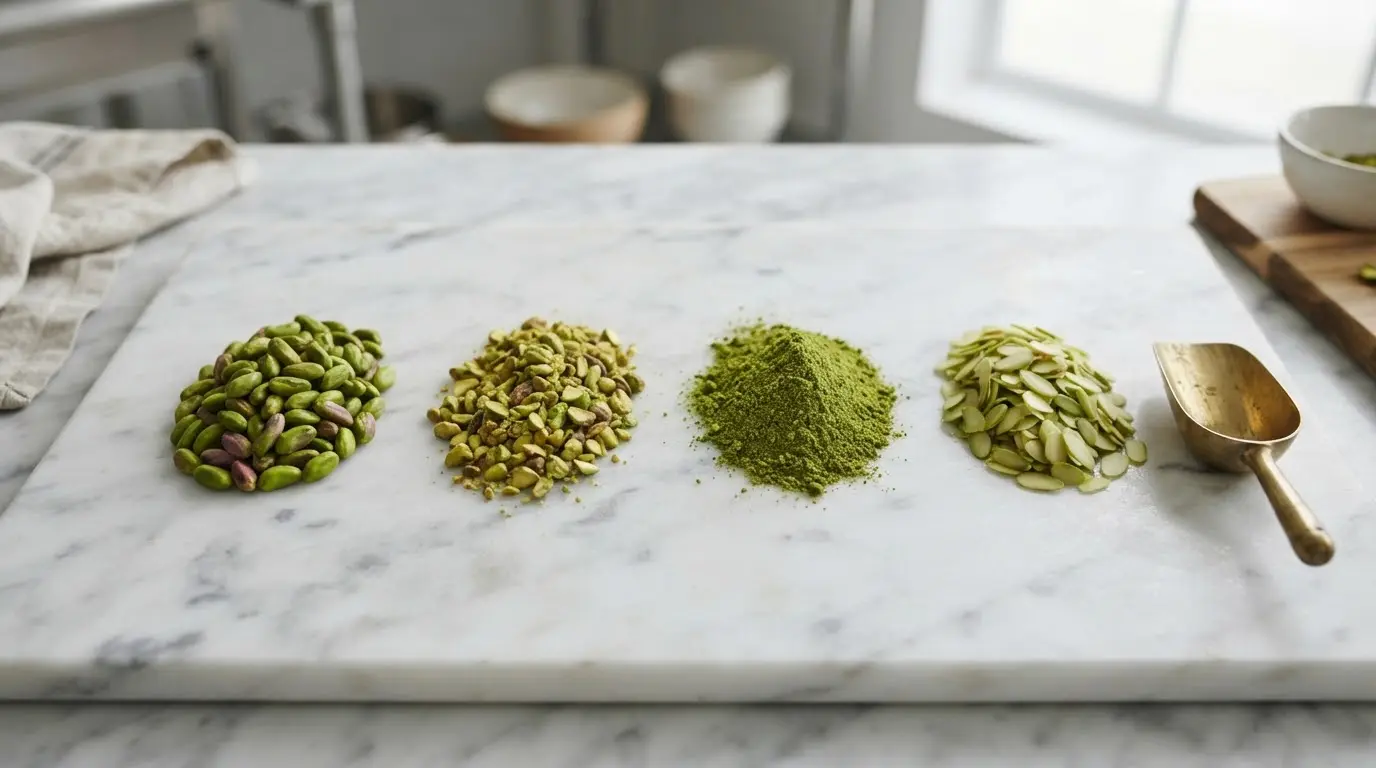
The formats, and where each belongs
Pistachio kernel formats
Format | What it is | Where it is used |
|---|---|---|
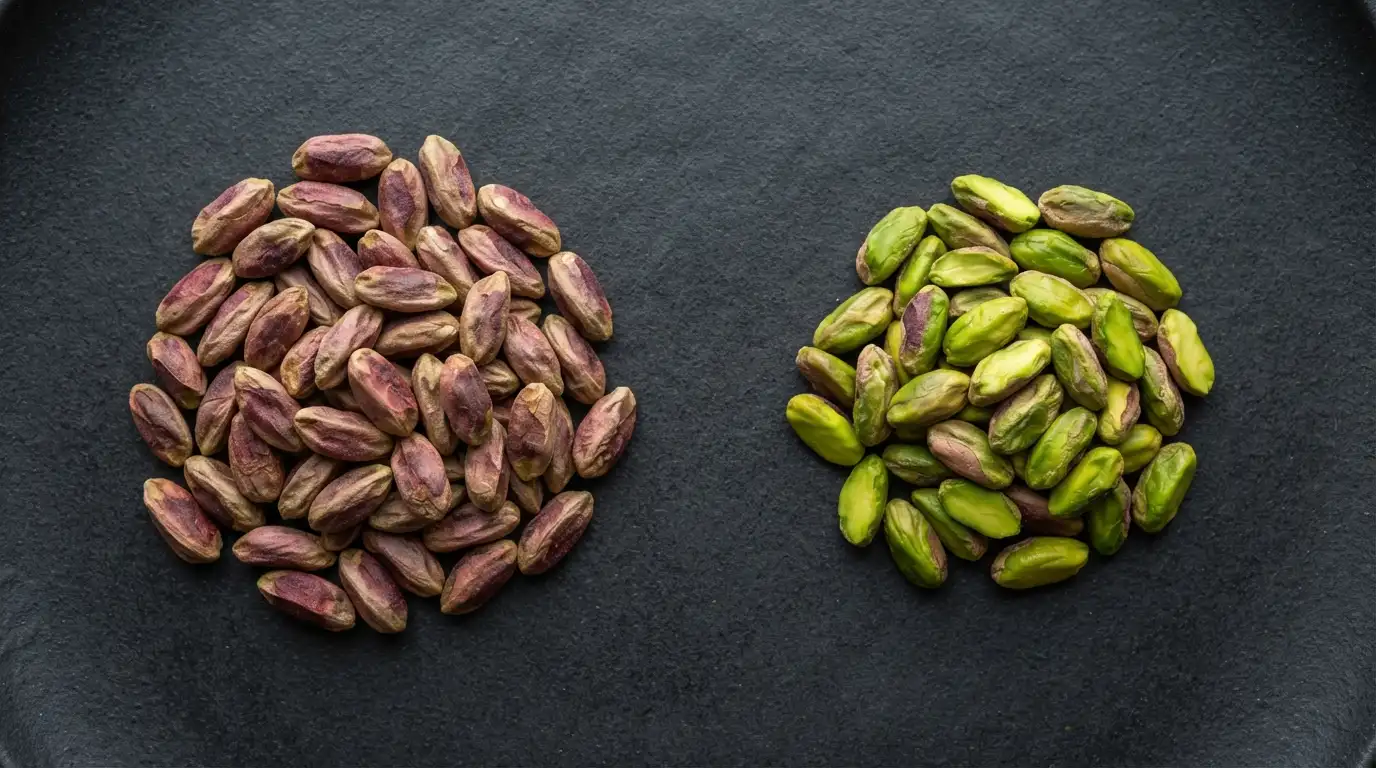
Whole | Intact kernels, natural or green peeled | Borma, mabroumeh, decoration, snacks |
Halves | Kernels split along their natural line | Chocolate bars, biscuit tops, fillings at lower cost |
Chopped / pieces | Broken kernel screened into size bands | Baklava and maamoul fillings, bakery, ice-cream inclusions |
Ground (powder) | Kernel milled to a fine or medium powder | Kunafa topping, doughs, macarons, ice-cream bases |
Slivers | Kernel cut lengthwise into thin strips | Cake edges, plated desserts, premium decoration |
In Arabic trade terms, "mabshour" usually means slivered or finely shaved pistachio, "mathoun" means ground, and "mabroush" is used for coarse grated pistachio. When you buy, describe the cut in plain words or with a sample photo as well as the trade name, because these terms are used loosely from one market to the next.
Why cut formats age faster
Every cut exposes fresh surface to air, and pistachio kernel is rich in oil. Grinding goes further: it breaks the cells and releases oil onto the surface of each particle. The result is simple — the finer the format, the faster it oxidises and the sooner it tastes stale. A shelf life that holds for whole kernel does not carry over to powder cut from the same lot.
Whole and halves: the most stable; suitable for planned stock.
Chopped and slivers: shorter life; order for the next few months of use.
Ground: the most fragile; vacuum or nitrogen-flushed packing, cool storage, and small, frequent orders.
How to specify each format
Beyond grade, colour and aflatoxin — the lines every kernel purchase needs — each format has one extra line that prevents most disputes.
Format | The extra line to write |
|---|---|
Whole | Minimum whole-kernel percentage by weight (for example 85%) |
Halves | Minimum halves percentage, maximum pieces allowed |
Chopped | Particle size band in millimetres, plus maximum fines (dust) |
Ground | Fineness (fine or medium) described against a sample, plus moisture on the packed product |
Slivers | Approximate length and thickness, plus maximum broken slivers |
Particle size is where most complaints come from. "Chopped" can arrive as anything from near-halves to something close to meal unless you give a size band.
Buy cut, or cut in-house?
Buying pre-cut saves labour and equipment, and for slivers it is almost always the right call — cutting even slivers needs dedicated machinery. For powder the answer depends on volume. A workshop that uses powder daily and has a grinder often gets a fresher product by grinding halves or pieces in small batches. A factory that needs a consistent particle size across tonnes is usually better served by buying ground to specification.
How each format is used across Arab sweets is covered in pistachios for baklava and kunafa. If you are sourcing kernels for the Indian market, formats and clearance are covered in pistachio kernels for India.
Questions buyers ask
What is the difference between ground and slivered pistachio?
Ground pistachio is kernel milled to a powder and is used in fillings, doughs, kunafa toppings and ice-cream bases. Slivered pistachio is kernel cut lengthwise into thin strips and is used mainly for decoration.
Why does ground pistachio go stale faster?
Grinding breaks the kernel cells and releases oil onto every particle, so far more surface is exposed to air. That speeds up oxidation, which is why powder needs sealed packing, cool storage and quick use.
How do I specify chopped pistachio?
Give a particle size band in millimetres and a maximum percentage of fines, in addition to grade, colour, moisture and aflatoxin. Without a size band, chopped kernel can arrive in almost any size.
Should I buy pistachio powder or grind it myself?
If you use powder daily and have a grinder, grinding halves or pieces in small batches gives a fresher product. If you need a consistent particle size across large volumes, buy ground to specification.
Can one order include several kernel formats?
Yes. List each format as a separate line with its own specification and net weight so the lot can be checked line by line on arrival.
Need a specific cut?
Tell us the format, size and monthly volume. See our pistachio kernels or request a quote.