What Sets the Wholesale Price of Pistachios
There is no single "price of pistachios". There is a price for a particular variety, size, shell form and crop year, delivered on particular terms. Most arguments about price are really arguments about specification.
A buyer collects three quotes for "Iranian pistachios, 22/24" and finds a wide spread between the cheapest and the most expensive. It is tempting to assume someone is overcharging. Usually the three suppliers are quoting three different products and three different sets of terms. This guide goes through what moves the number, in roughly the order of how much it moves it.
We deliberately do not quote prices here: they change with every crop and every week. What does not change is the structure behind them.
1. The crop
Pistachio trees bear heavily and lightly in alternate years, and weather — a late frost at flowering, heat at the wrong moment — can cut a region's crop sharply. A short Iranian crop raises Iranian prices; a short crop in any major origin tightens the whole market. Prices set early in the season reflect the size of the harvest that traders expect, and they adjust as the real harvest becomes clear.
2. Variety and size
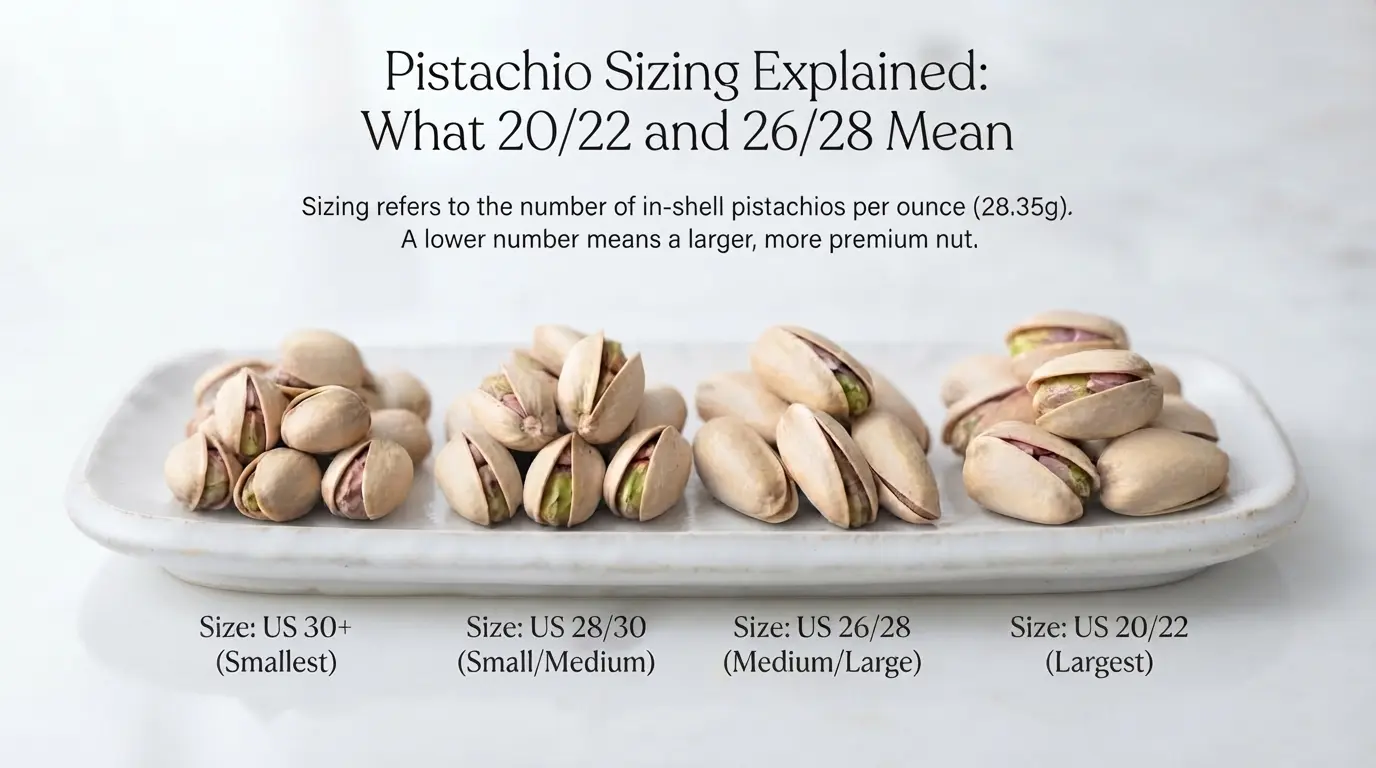
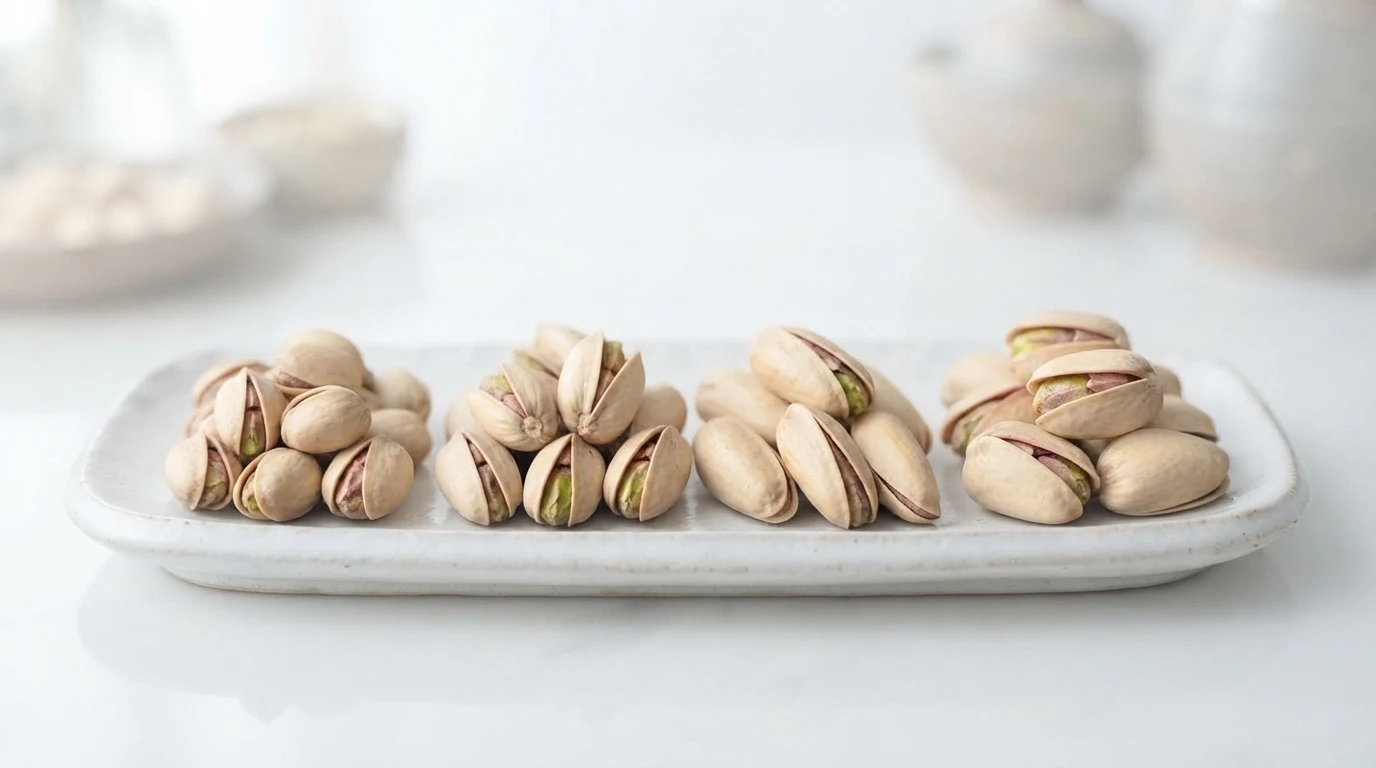
Long and large nuts cost more than small round ones, because they sell for more in appearance-led markets and because the large sizes are scarcer. Akbari and Jumbo at 20/22 sit at the top; Fandoghi at 30/32 at the bottom. Each size step matters — see pistachio sizing explained and the four Iranian varieties.
3. Shell form and kernel content
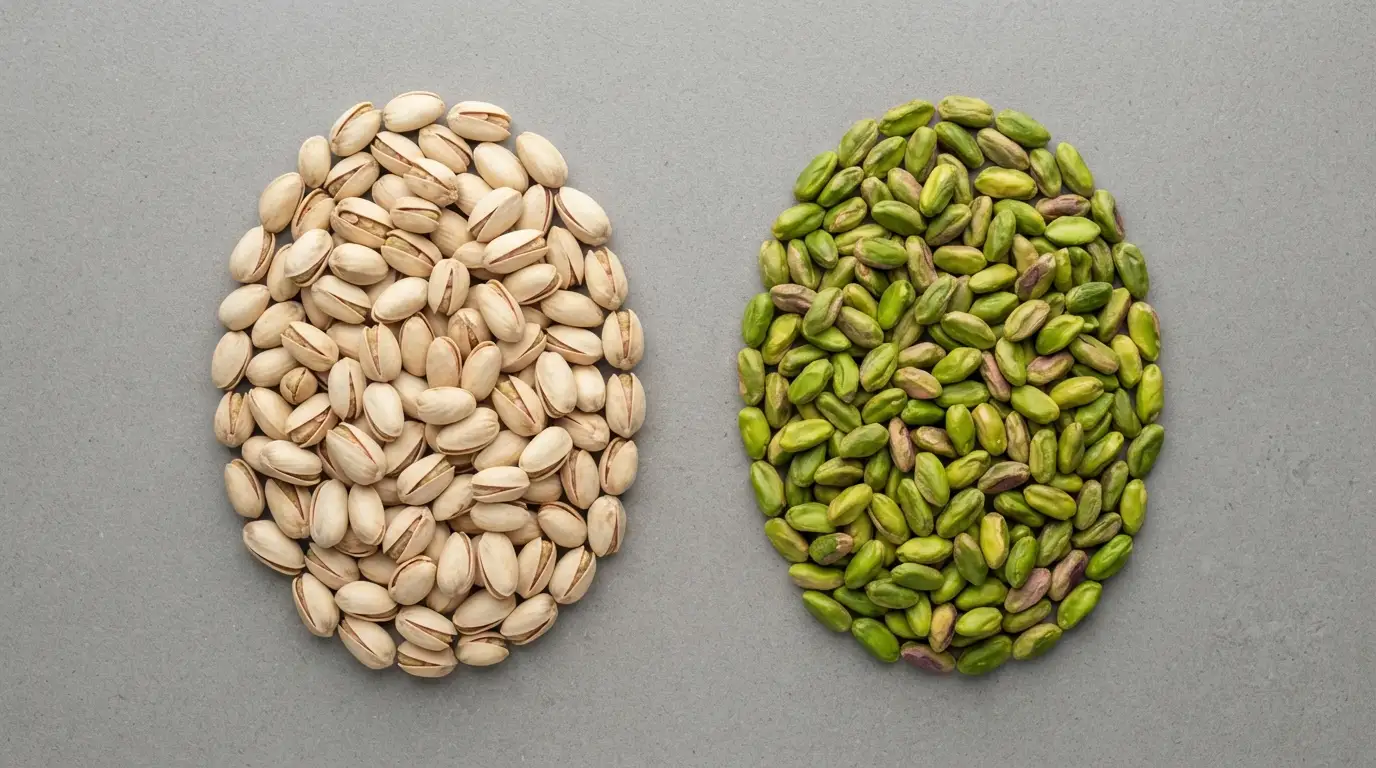
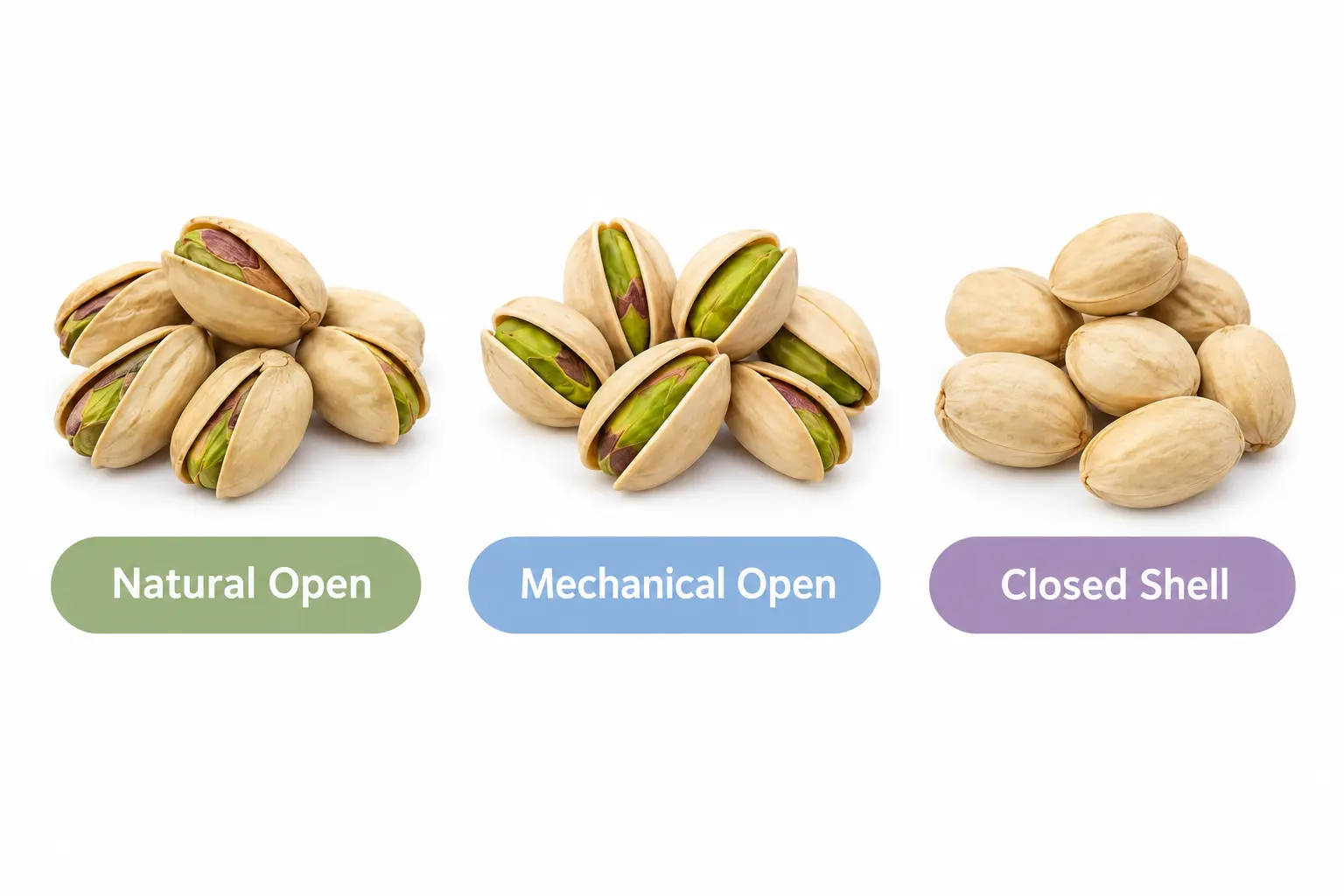
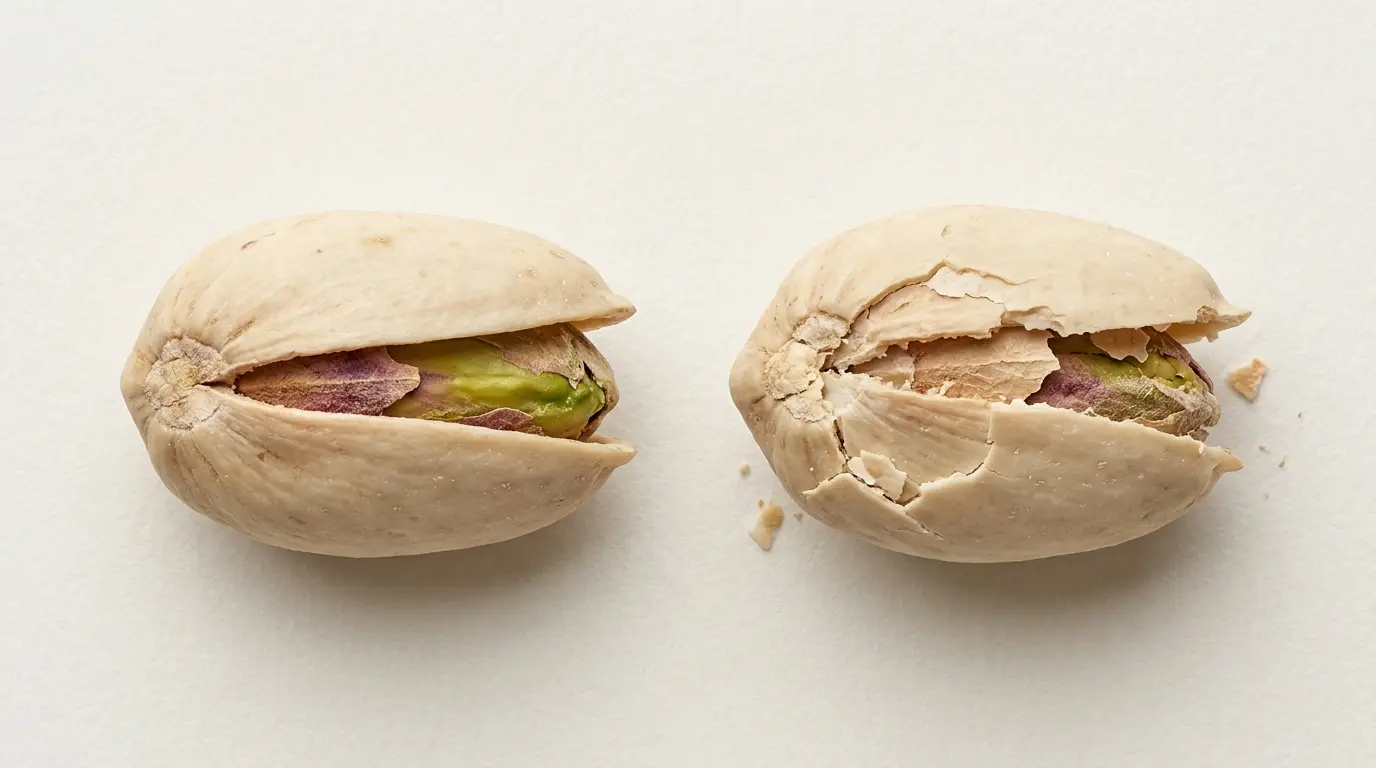
This is the factor most often hidden in a cheap quote. Naturally open pistachios typically carry a kernel-to-shell ratio above 53%; mechanically opened product is reported below 50%. On kernel content alone, a mechanically opened lot has to be roughly 9–10% cheaper just to break even. If a quote does not state shell form and closed-shell percentage, you cannot compare it. The arithmetic is set out in natural open vs mechanical open.
4. Kernel grade and colour
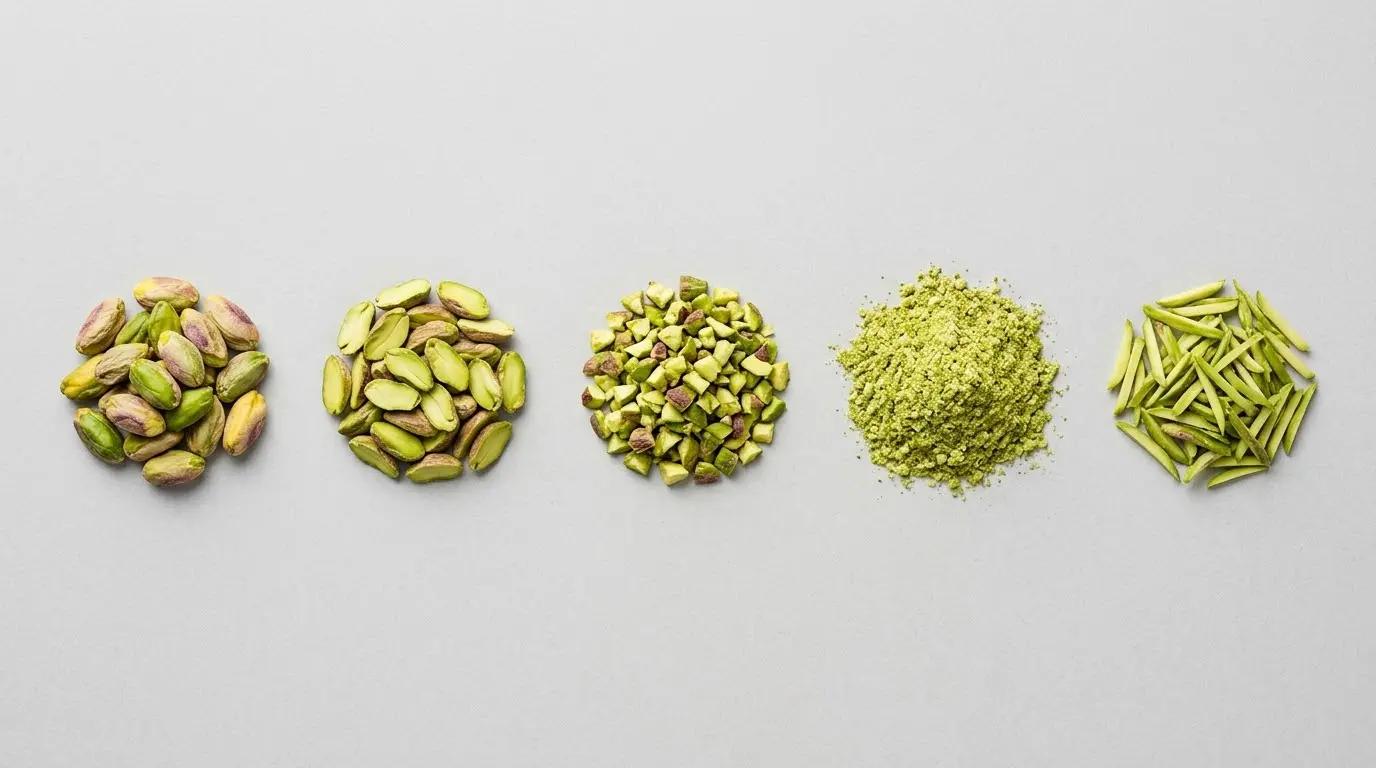
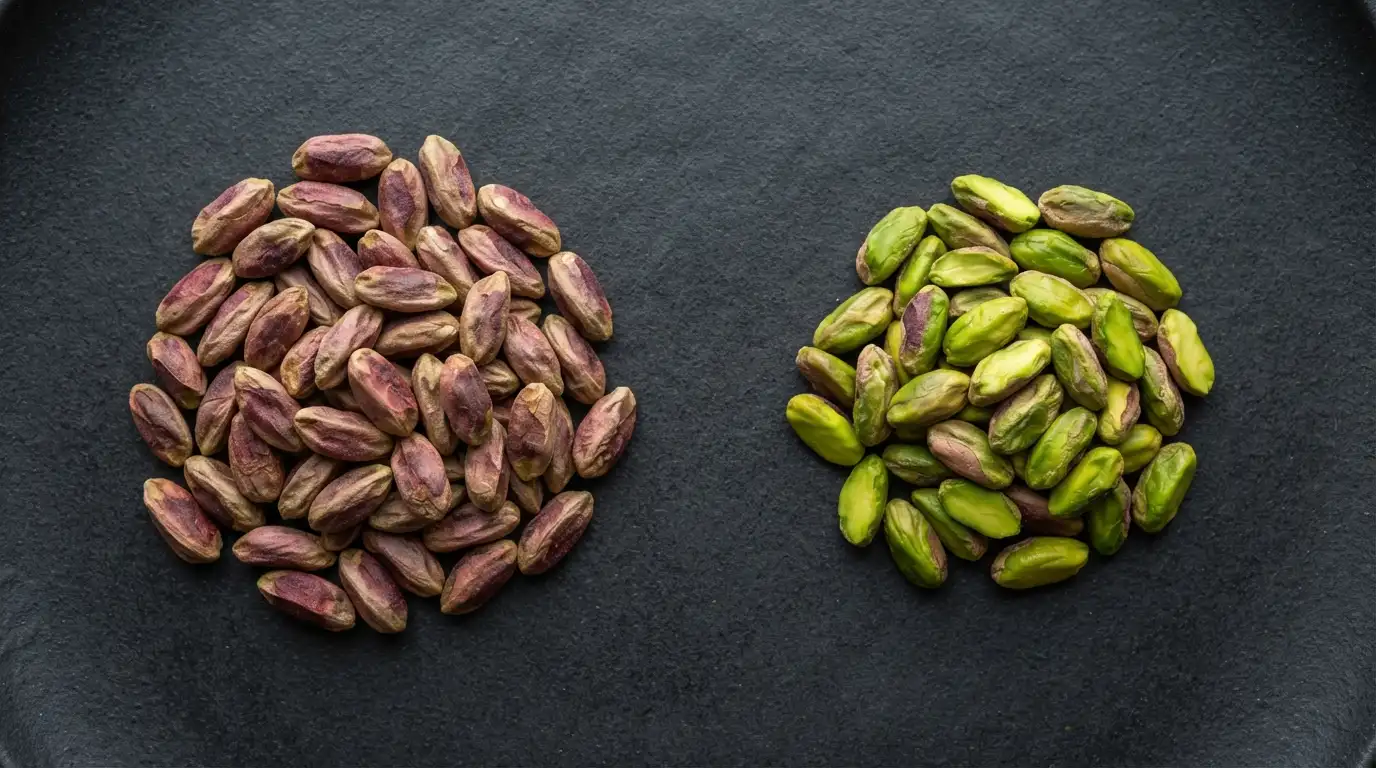
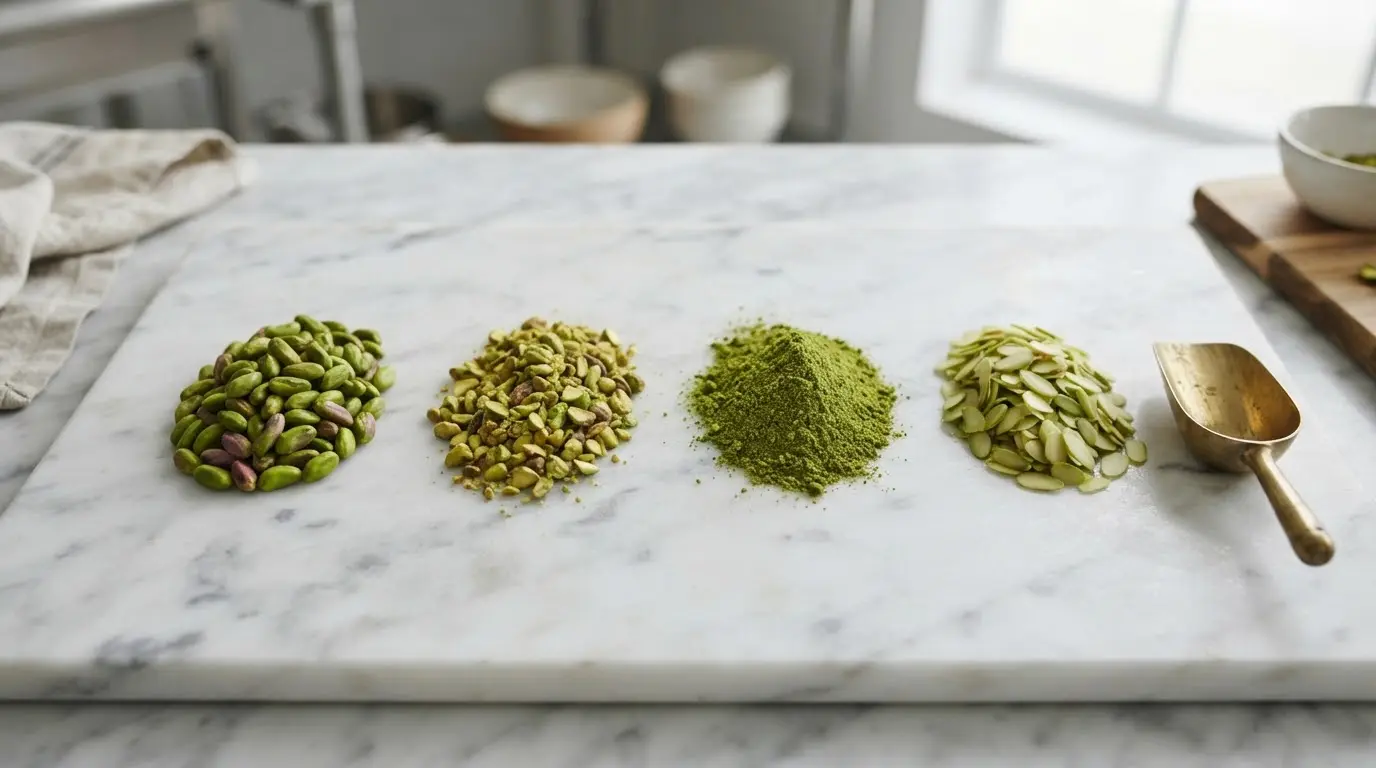
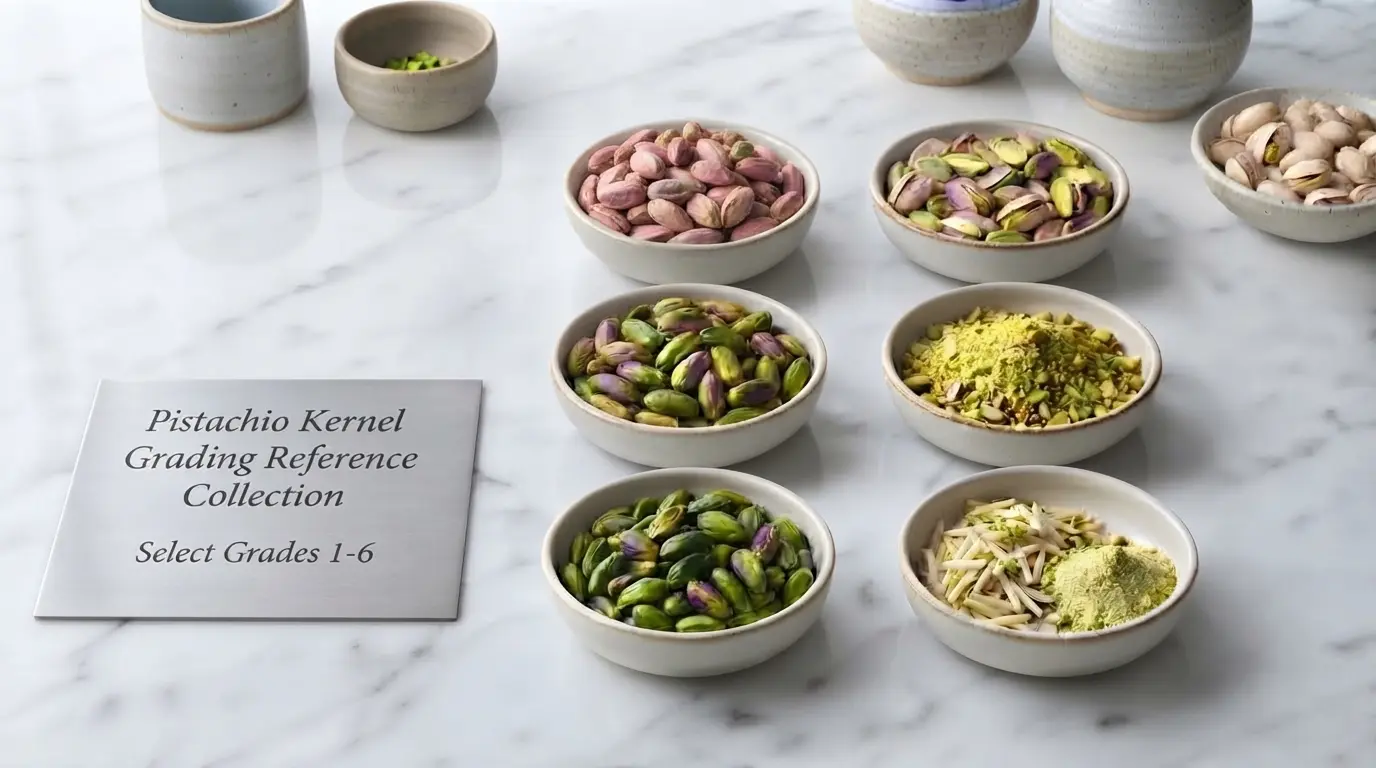
In kernels, colour sets the price the way size does for in-shell nuts. Whole natural kernel is the base; green peeled kernel costs more because of the peeling; early-picked kernel costs most because the grower gives up yield for colour. Halves, pieces, slivers and powder each have their own price level. See green pistachio kernels in bulk and ground vs slivered pistachios.
5. Timing and crop year
New-crop pistachios arrive from the autumn harvest, and the best large-size lots are allocated early. Late in the season, the same specification can cost more or simply be unavailable, and carry-over stock from the previous crop may be offered instead. A quote without a crop year is incomplete.
6. Competing origins
Iranian prices do not move in isolation. The United States is by far the largest exporter: according to World's Top Exports, US pistachio exports were worth about US$2.6 billion in 2025, roughly half of the world total, against about US$689 million (13.4%) for Iran and US$497 million (9.6%) for Türkiye. When the American crop is large, buyers have alternatives and Iranian prices feel it; when it is short, demand shifts toward Iran.
For a sense of scale only, the same source puts the world average import value in 2025 at about US$7,922 per tonne for in-shell pistachios and about US$15,817 per tonne for shelled. These are averages across every origin and quality — useful context, not a quote.
7. Compliance, packing and logistics
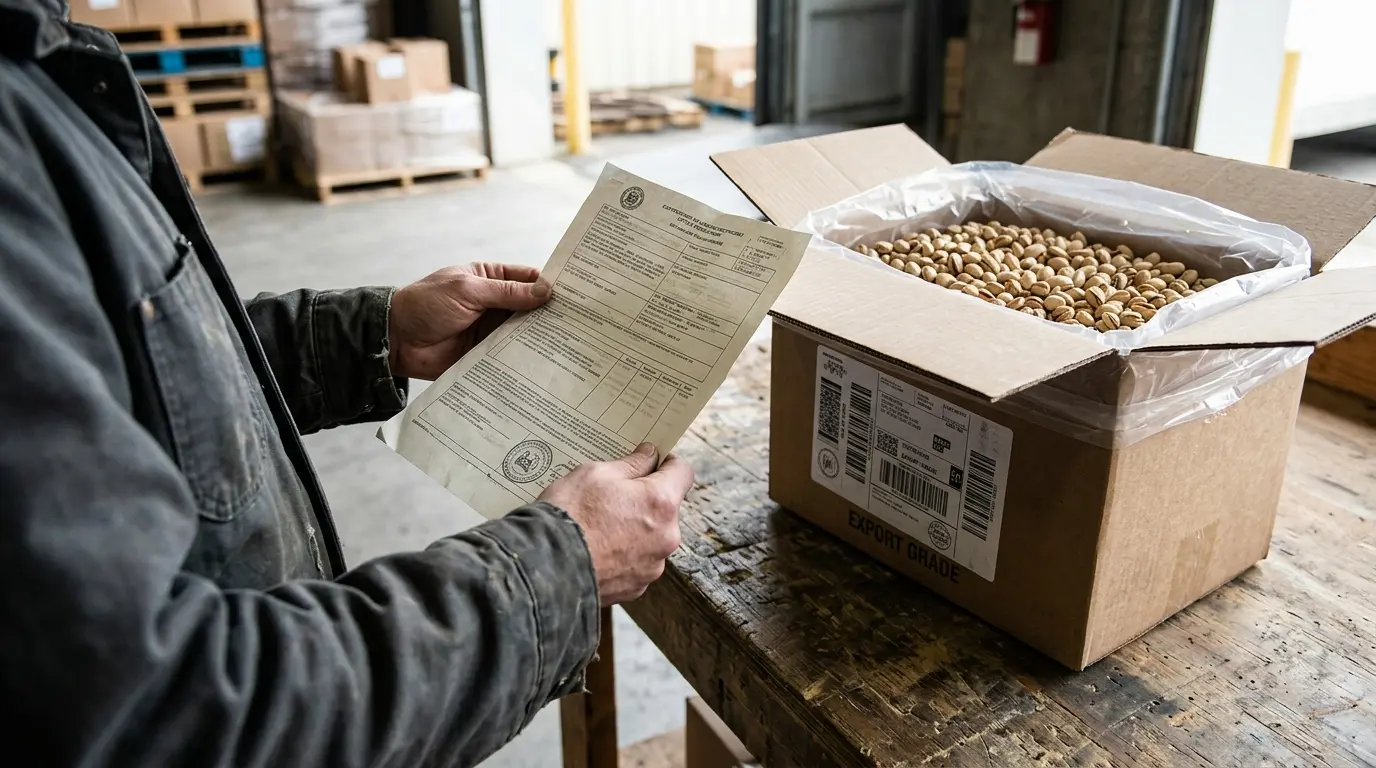
Laboratory testing and certification — lot-specific aflatoxin analysis and food-safety certification cost money, and markets with strict controls cost more to serve.
Packaging — vacuum cartons cost more than woven bags, and nitrogen flushing more again; each changes shelf life.
Incoterm — an FOB price excludes sea freight and insurance; a CIF price includes them. Comparing an FOB quote with a CIF quote is comparing different things.
Payment terms — terms that shift risk or delay payment are priced in.
How to compare two quotes fairly
# | Before comparing, make sure both quotes have the same… |
|---|---|
1 | Variety, size band and crop year |
2 | Shell form, closed-shell cap and minimum kernel ratio |
3 | Kernel grade, whole-kernel percentage and colour reference (for kernels) |
4 | Preparation (raw, roasted, salted) |
5 | Packaging and net weight per unit |
6 | Incoterm and named port |
7 | Aflatoxin limit and testing arrangement |
8 | Payment terms |
Once those match, the remaining difference is real — and it is often smaller than it first looked. How Iranian and American product compare beyond price is covered in Iranian vs American pistachios, and how an order runs once you have chosen in from sample to container.
Questions buyers ask
Why do pistachio prices vary so much between suppliers?
Usually because the quotes describe different products or terms: different sizes, shell forms, kernel ratios, crop years, packaging or Incoterms. Align the specification and terms first; the remaining difference is the real one.
What has the biggest effect on the price of in-shell pistachios?
Variety and size, followed closely by shell form. Naturally open, large, long nuts cost the most; mechanically opened or small round nuts cost less.
Why are mechanically opened pistachios cheaper?
They come from nuts that did not open on the tree and usually contain less kernel, with reported kernel-to-shell ratios below 50% against above 53% for naturally open nuts.
When are pistachio prices usually lowest?
There is no fixed rule, because prices depend on the size of each crop. But new-crop supply is widest after the autumn harvest, and the best large sizes are easiest to secure early in the season.
What is the difference between an FOB and a CIF pistachio price?
An FOB price covers the goods loaded on the vessel at the origin port. A CIF price also includes sea freight and insurance to the destination port.
Want a quote you can actually compare?
Send your specification and destination port and we will quote line by line, with every term stated. Request a quote.