The Global Rise of Iranian Pistachios: Quality, Heritage, and Modern Export Standards

For centuries, the arid highlands of Kerman province have yielded some of the world's most prized pistachios. The combination of mineral-rich soil, extreme diurnal temperature shifts, and generations of horticultural knowledge has produced a nut that commands premium prices in markets from Hamburg to Hong Kong. Today, Iranian pistachio exporters are building on that legacy with rigorous quality certification, cold-chain logistics, and transparent traceability systems that meet the expectations of the most demanding global buyers.
A Heritage Rooted in the Land
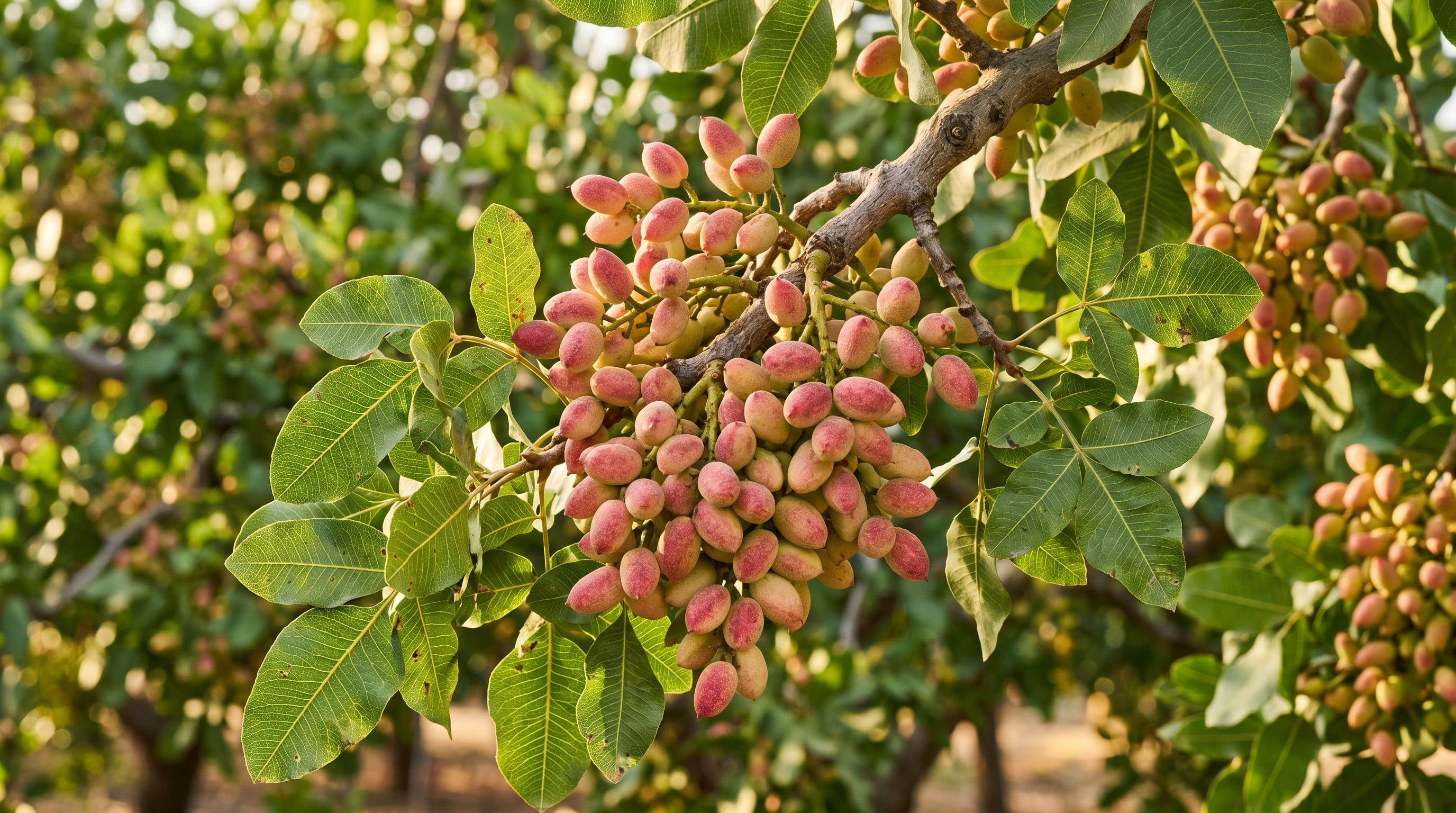
The Pistacia vera tree thrives under conditions that would stress most cultivated crops. In the Rafsanjan basin, annual rainfall rarely exceeds 150 millimetres, yet the deep-rooted trees draw moisture from aquifers that have sustained agriculture for millennia. Farmers rotate between the prized Fandoghi, the elongated Akbari, and the plump Ahmad Aghaei varieties, each occupying a distinct market niche. Fandoghi, with its naturally split shell and sweet kernel, dominates the snack market. Akbari, prized for size and presentation, finds favour among European confectioners and gift-pack producers. The careful management of these distinct cultivars is what allows Iranian exporters to offer genuine variety rather than a commodity.
Akbari pistachios, prized for their elongated form and delicate flavour profile.
Modern Standards, Ancient Craft
The past decade has seen a significant investment in post-harvest infrastructure across Iran's major producing regions. State-of-the-art sorting lines equipped with optical colour sensors now remove discoloured or undersized kernels at rates that manual grading could never match, while simultaneously recording batch data for downstream traceability. Cold-storage facilities operating at controlled humidity prevent the aflatoxin accumulation that once represented a regulatory hurdle in European markets. Exporters seeking EU or FDA market access now routinely obtain HACCP, ISO 22000, and GlobalGAP certifications, presenting a compliance dossier alongside every commercial invoice. This shift from informal quality assurance to documented, third-party-verified standards has been the single most important factor in rebuilding trust with risk-averse importers.
Automated optical sorting lines ensure batch consistency before export packaging.
Logistics, Labelling, and the Luxury Positioning
Positioning Iranian pistachios as a premium agricultural product requires more than superior flavour; it demands an end-to-end experience that communicates provenance and care. Forward-thinking exporters now invest in bilingual origin labelling, vacuum-sealed retail packaging with QR-code traceability, and temperature-monitored sea freight containers that maintain cargo below eight degrees Celsius throughout the transit to European ports. The result is a product that arrives in Rotterdam or Hamburg with the same sensory profile it left Rafsanjan with — an assurance that commands shelf space in premium retail chains rather than bulk commodity bins. As the global appetite for premium snacking continues to grow, Iranian pistachios are positioned not merely as an agricultural export but as a narrative of landscape, craft, and rigorous modern practice.