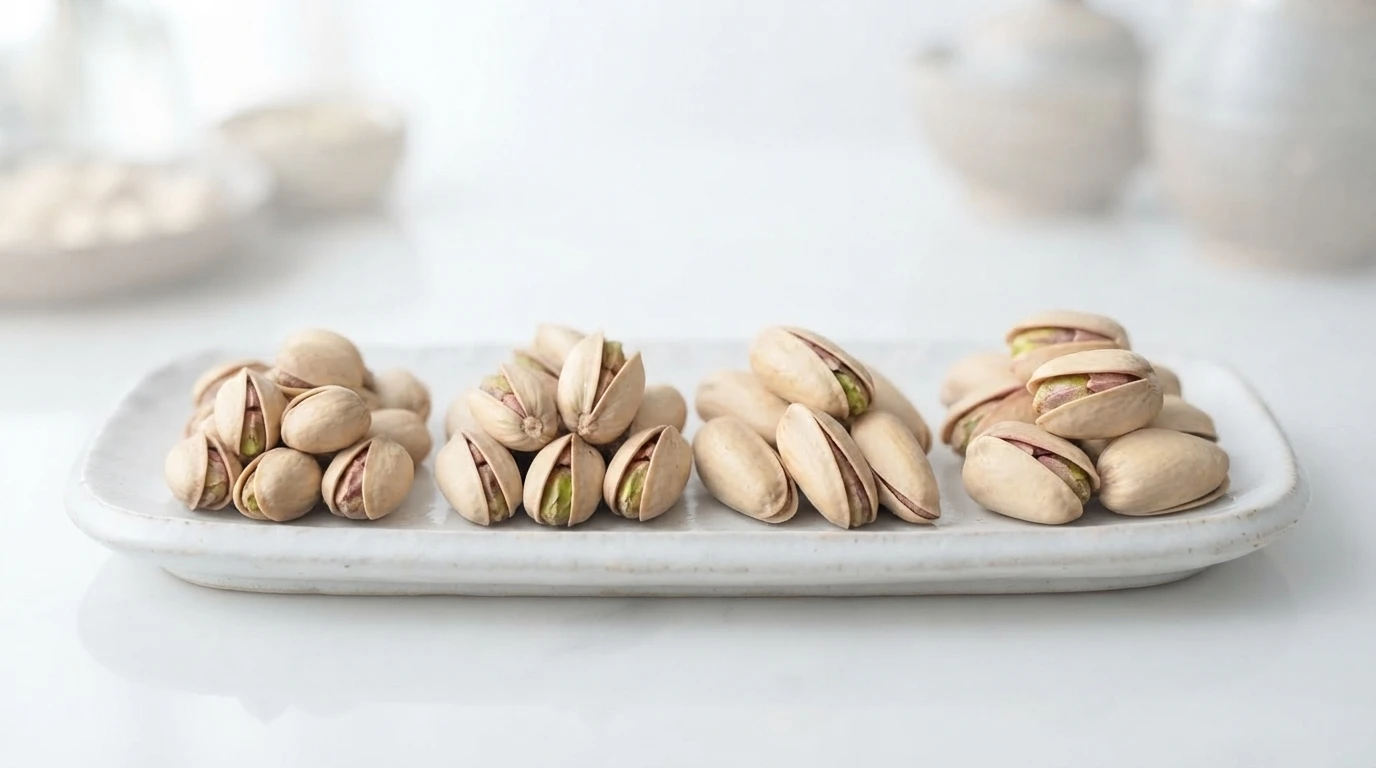
Buying Pistachios Wholesale for the Gulf: A Distributor's Checklist
Most pistachio disputes in the Gulf trade are settled before the container is loaded — or, more often, they are created there. This is the list a distributor should work through before signing for the first lot.
A few weeks before Ramadan, a distributor in Riyadh places an order for "Iranian pistachios, jumbo, best quality". The container arrives on time. The nuts are fine. And yet a third of his customers complain, because half of them wanted a long nut for gift trays and the other half needed shelled green kernels for their pastry kitchens. Nothing went wrong with the shipment. What went wrong was the order.
Buying pistachios by the container is not complicated, but it is unforgiving. The checklist below follows the order in which the decisions actually have to be made.
1. Decide which trade you are in: in-shell or kernel
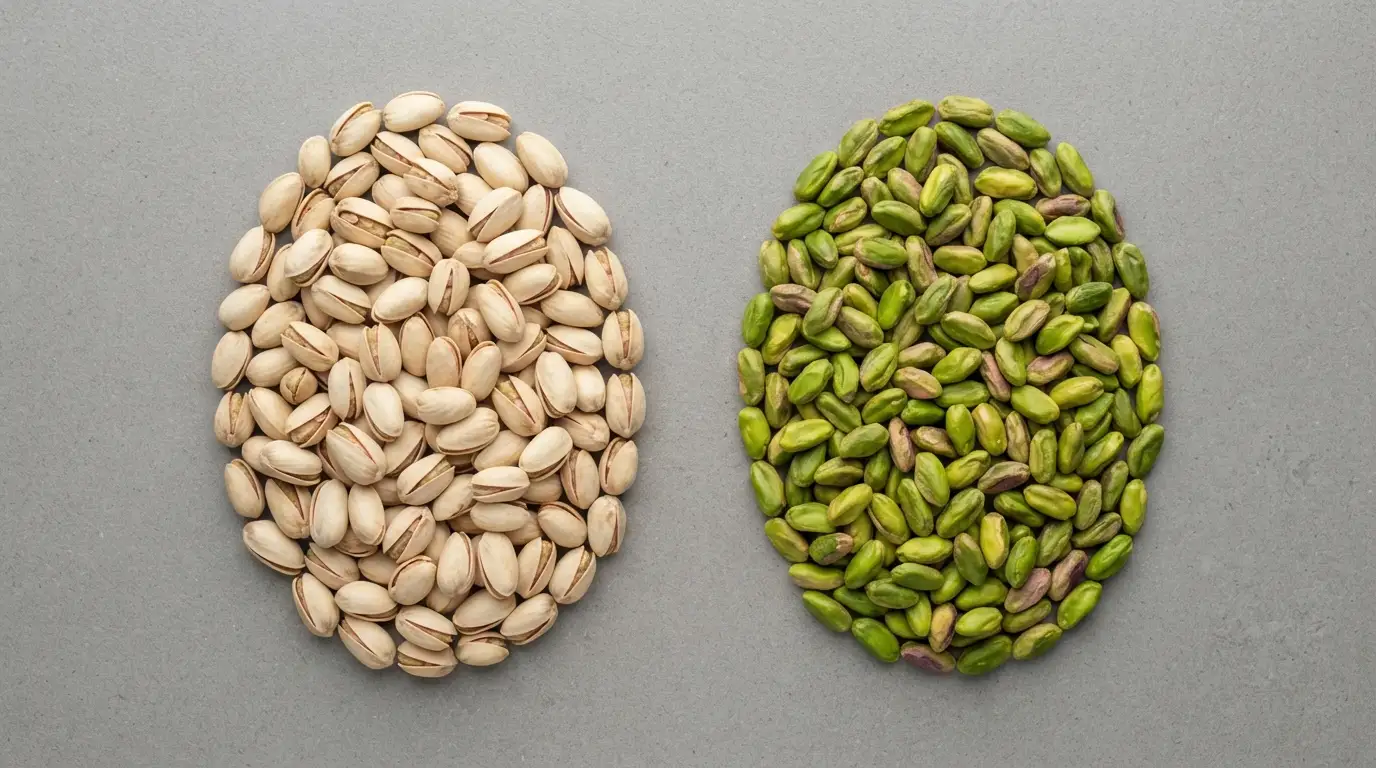
In-shell pistachios and shelled kernels are two different businesses that share a raw material. In-shell product is sold to roasters, retailers and the snacking market, where the nut is seen before it is eaten. Kernels are sold to sweet makers, ice-cream producers and food factories, where the nut becomes an ingredient. They even clear customs under different codes: HS 0802.51 for in-shell and HS 0802.52 for shelled.
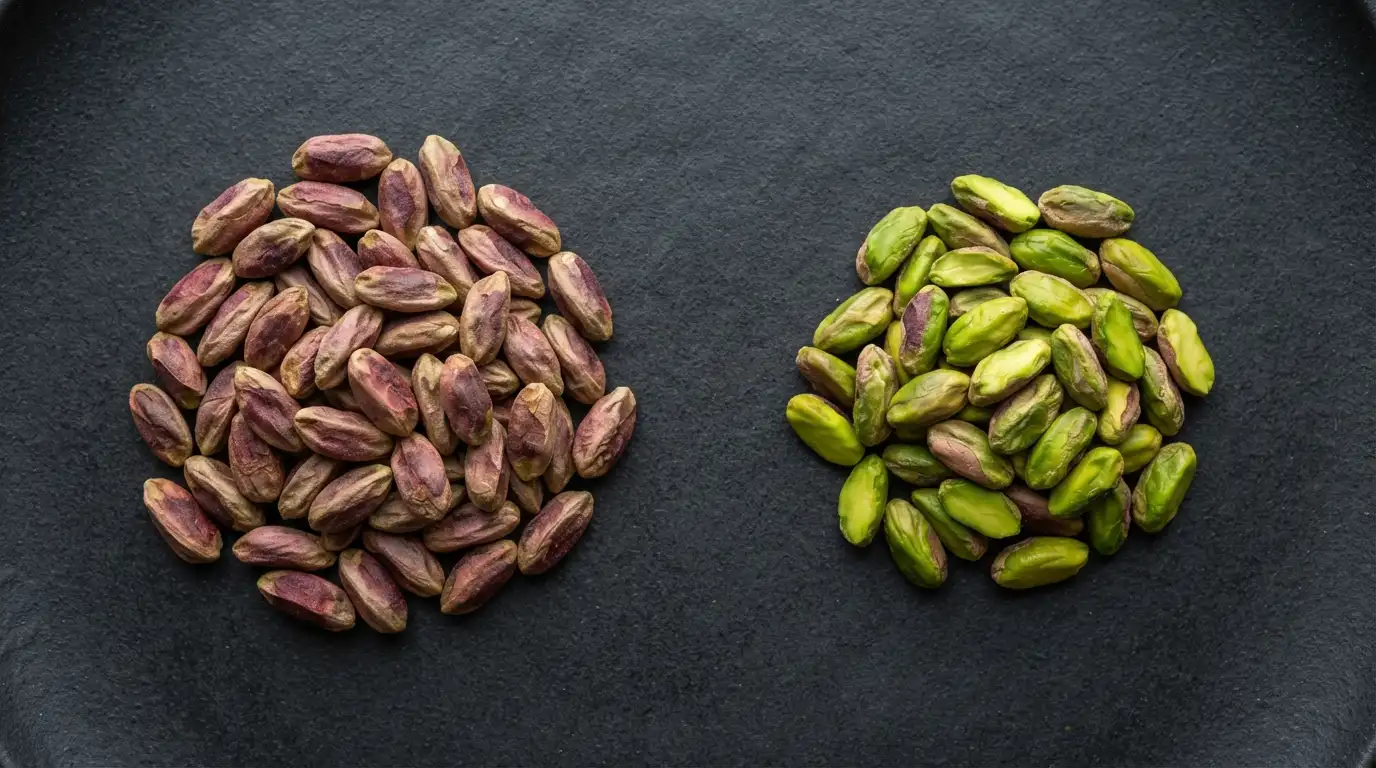
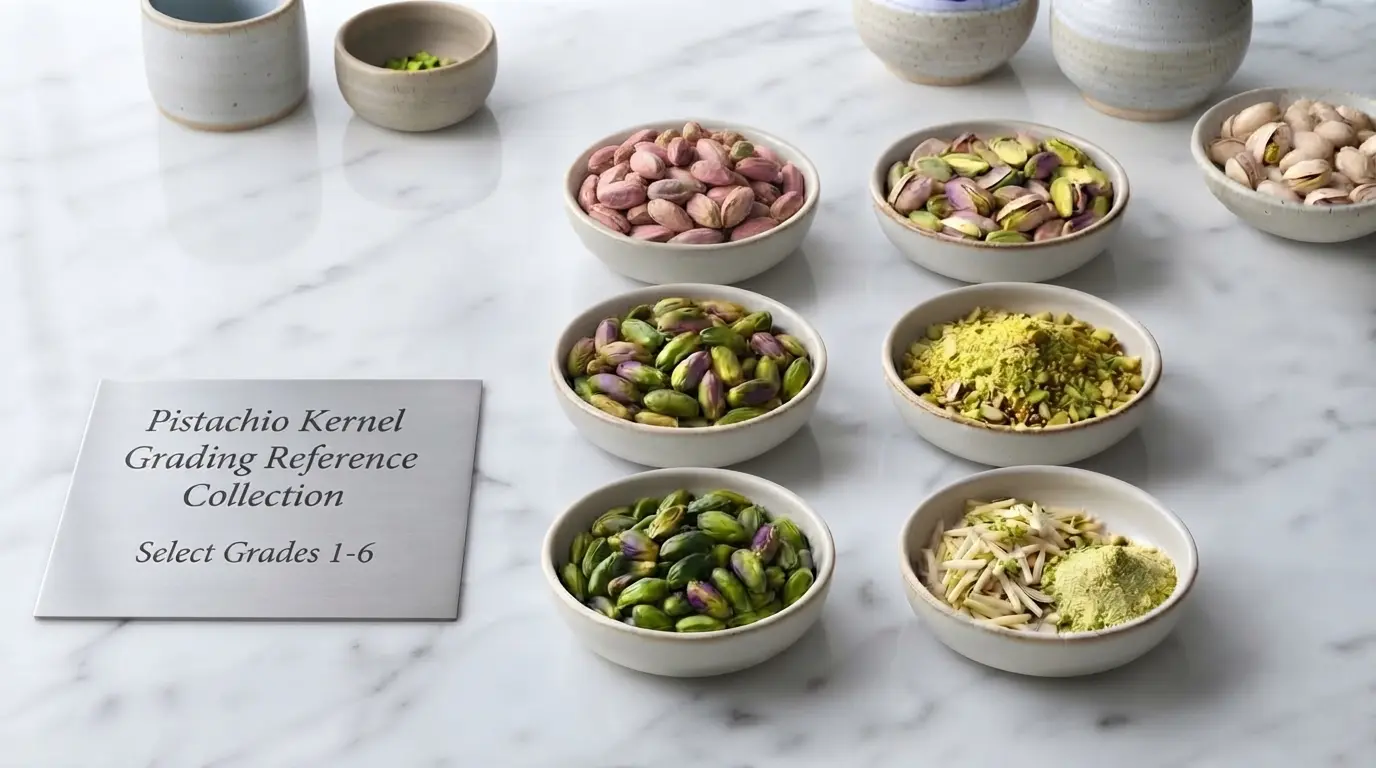
If your customer base is mixed, split the order into separate lines rather than asking one lot to serve both. The kernel side has its own grade structure, explained in our guide to the six pistachio kernel grades, and if your buyers are pastry kitchens, start with green pistachio kernels in bulk.
2. Write the six-line specification
A quotation you can compare against another one needs six lines. Leave any of them out and the supplier will quietly price the cheapest interpretation.
The six lines of a pistachio purchase specification
Line | Example | Why it matters |
|---|---|---|
Variety | Akbari | Sets shape, size ceiling and availability. See the four Iranian varieties. |
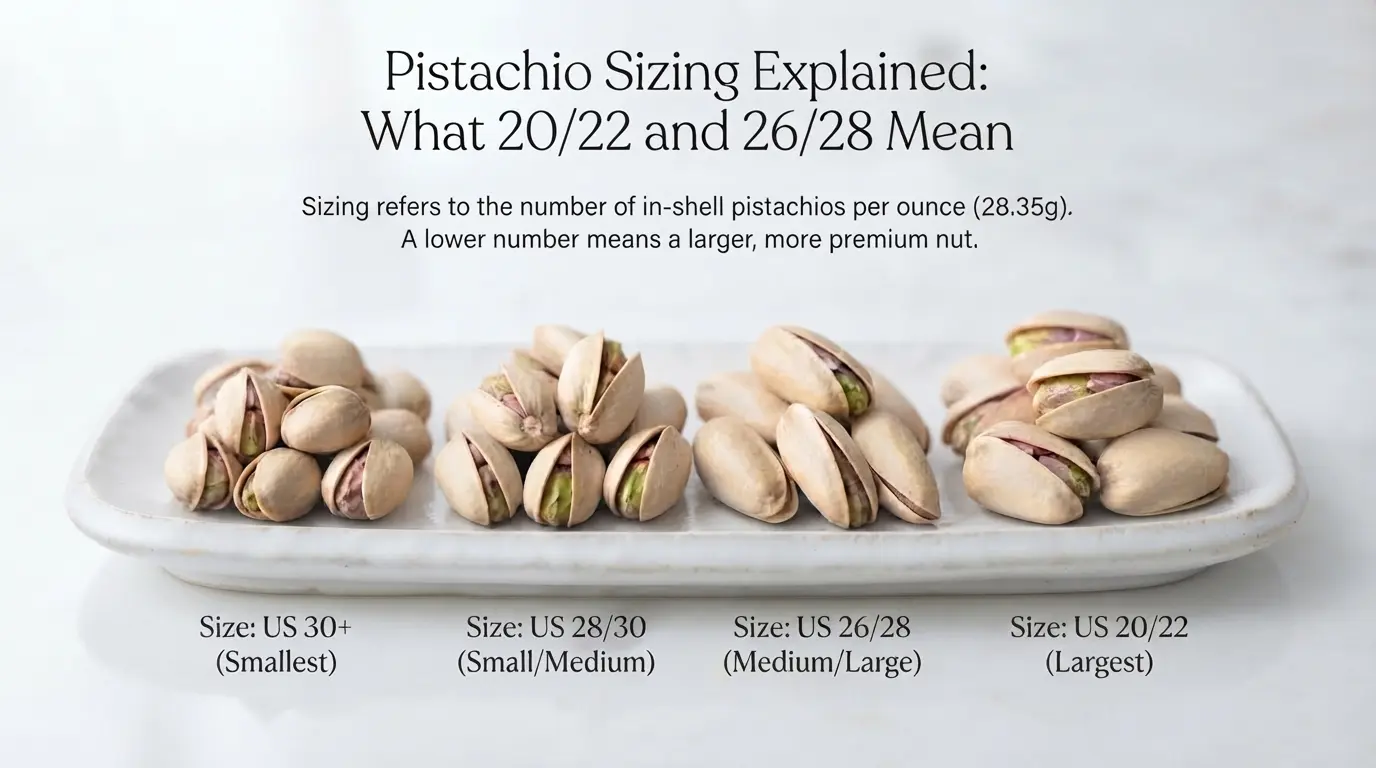
Size | 22/24 nuts per ounce | A count per ounce, not per pound. See pistachio sizing explained. |
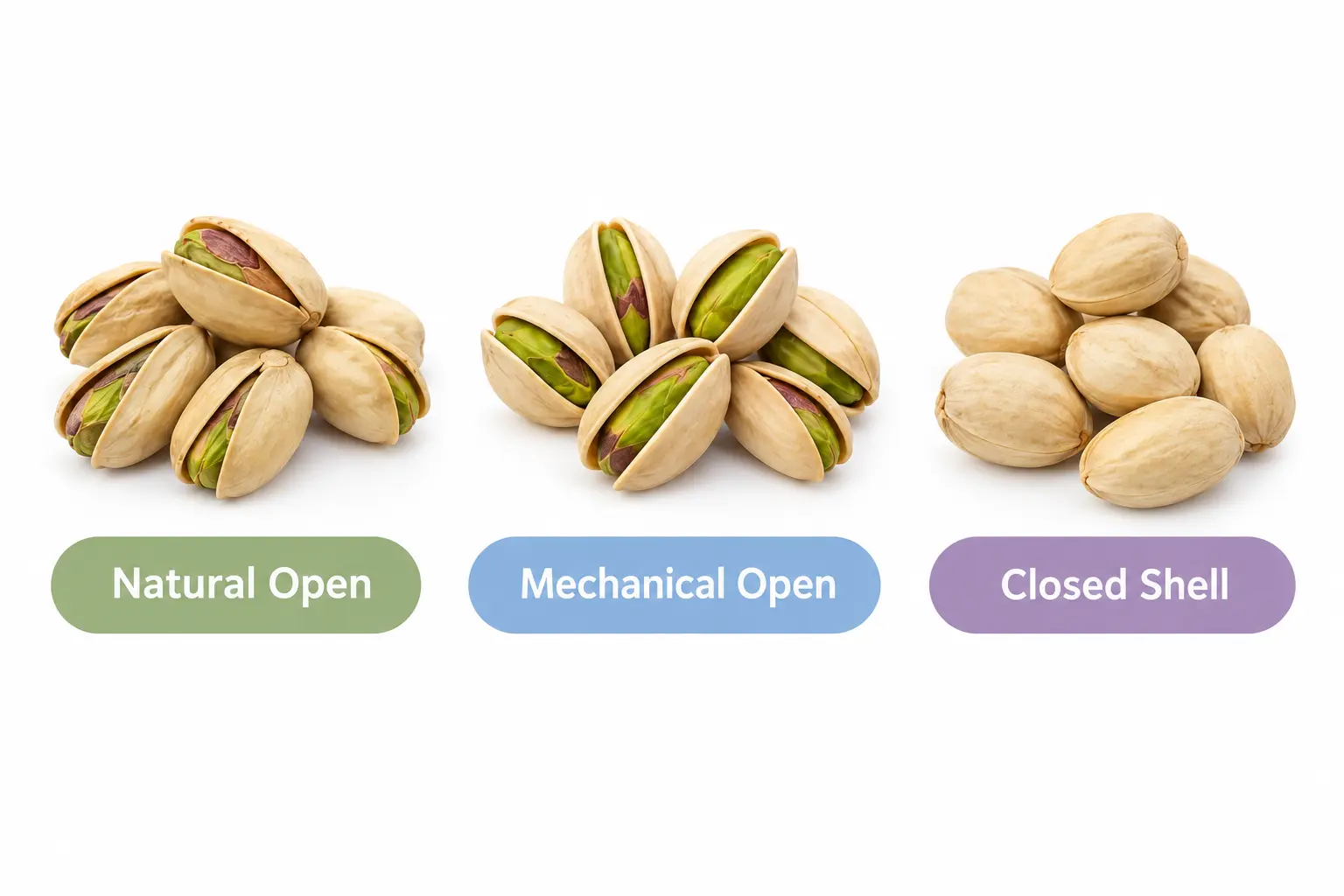
Shell form | Naturally open, max 2% closed shell | The biggest hidden price variable. See natural vs mechanical open. |
Preparation | Roasted and salted | Changes moisture behaviour and shelf life. |
Crop year | 2026 crop | New-crop and carry-over lots are not the same product. |
Packaging | 10 kg vacuum cartons | Decides pallet layout, container fill and shelf life. |
3. Match the product to the customer, not to the price
The Gulf is two markets inside one. The majlis and gift-tray trade buys on appearance: long nuts such as Akbari and large ones such as Jumbo, naturally open, usually roasted and salted. The pastry and sweets trade buys on colour and consistency: green kernels, halves, slivers and powder for baklava, kunafa, maamoul and ice cream.
A distributor who sells to both should carry both, but should never let one product stand in for the other. A round Fandoghi nut is excellent value for a roaster and a poor choice for a gift box; a whole kernel with its skin on is fine for a snack pack and wrong for a pastry that sells on its green. For the sweets trade specifically, our guide to pistachios for baklava and kunafa goes through each product.
4. Know which documents the shipment needs
Your supplier should be able to send drafts of every document before loading, not after. For food shipments into the Gulf, expect at minimum:
Commercial invoice and packing list, with the lines matching your specification word for word.
Certificate of origin.
Health or phytosanitary certificate issued by the competent authority in the exporting country.
Laboratory certificate of analysis for aflatoxin and moisture, specific to the lot — not a generic report reused across shipments.
Bill of lading.
The GCC operates as a customs union. Its common external tariff is 5% on most goods imported from outside the union, a customs port in any member state counts as the point of entry for the whole union, and goods then move between member states without further customs restrictions. Confirm the exact duty for HS 0802.51 or 0802.52 with your broker before costing, and see the country guides for Saudi Arabia and the UAE.
5. Check the lot when it lands
Take samples from at least five cartons in different parts of the container, not from the door. Then run three quick checks. Size: weigh three portions of 28.35 g and count the nuts; all three counts should fall inside the contracted band. Shell form: sort 200 g into naturally open, mechanically opened and closed. Kernel content: shell 100 nuts and weigh the kernels. Photograph every scale reading and keep a sealed retained sample from each container.
If the kernel ratio on a lot sold as naturally open comes back below 50%, you have a measured finding rather than a feeling — and the conversation with the supplier changes.
6. Buy on the calendar, not in a hurry
Iran's pistachio harvest runs from late summer into autumn, and demand in the Gulf peaks around Ramadan and Eid. The large-size lots — Jumbo and Akbari at 20/22 and above — are allocated early. Distributors who book in the autumn for delivery ahead of Ramadan get the sizes they want; those who tender late find the price has moved and the sizes on offer have slipped a band smaller.
Price itself depends on far more than the variety name. Why two quotes for "the same" pistachio can differ widely is covered in what sets the wholesale price of pistachios.
The checklist
✓ | Before you order |
|---|---|
1 | In-shell and kernel lines separated, each with its own volume |
2 | Six-line specification written for every line |
3 | Closed-shell cap and minimum kernel ratio stated in the contract |
4 | Aflatoxin limit, sampling standard and lot-specific certificate required |
5 | Draft documents received and checked before loading |
6 | Duty confirmed with your broker for the correct HS code |
7 | Arrival check planned: five cartons, size count, shell form, kernel ratio |
8 | Order placed early enough for your peak season |
Once the checklist is done, the order itself follows ten steps, from samples to the day the container is opened — set out in from sample to container.
Questions buyers ask
What is the minimum quantity for a wholesale pistachio order?
It depends on the supplier, but container trade is usually priced per full 20-foot or 40-foot container, and many exporters accept mixed containers split across several varieties, sizes or kernel grades.
Should a Gulf distributor buy in-shell pistachios or kernels?
Both, if the customer base includes both roasters and sweet makers. In-shell pistachios serve retail and snacking, where the nut is seen. Kernels serve pastry, ice cream and food factories, where colour and consistency matter more than shell appearance.
Which Iranian pistachio variety sells best in the Gulf?
For gift trays and majlis serving, long Akbari and large Jumbo nuts sell best because the market buys on appearance. For price-led roasting, the round Fandoghi variety gives better value.
What documents do I need to import pistachios into the GCC?
At minimum a commercial invoice, packing list, certificate of origin, health or phytosanitary certificate, a lot-specific laboratory certificate of analysis and the bill of lading. Your broker will confirm any country-specific registrations.
When should I order pistachios for Ramadan?
Book in the autumn, soon after the Iranian harvest. Large sizes are allocated early and become harder to find as the season goes on.
Ready to plan a container?
Send us your six-line specification — or tell us who your customers are and we will propose one. Request a quote or browse the product range.