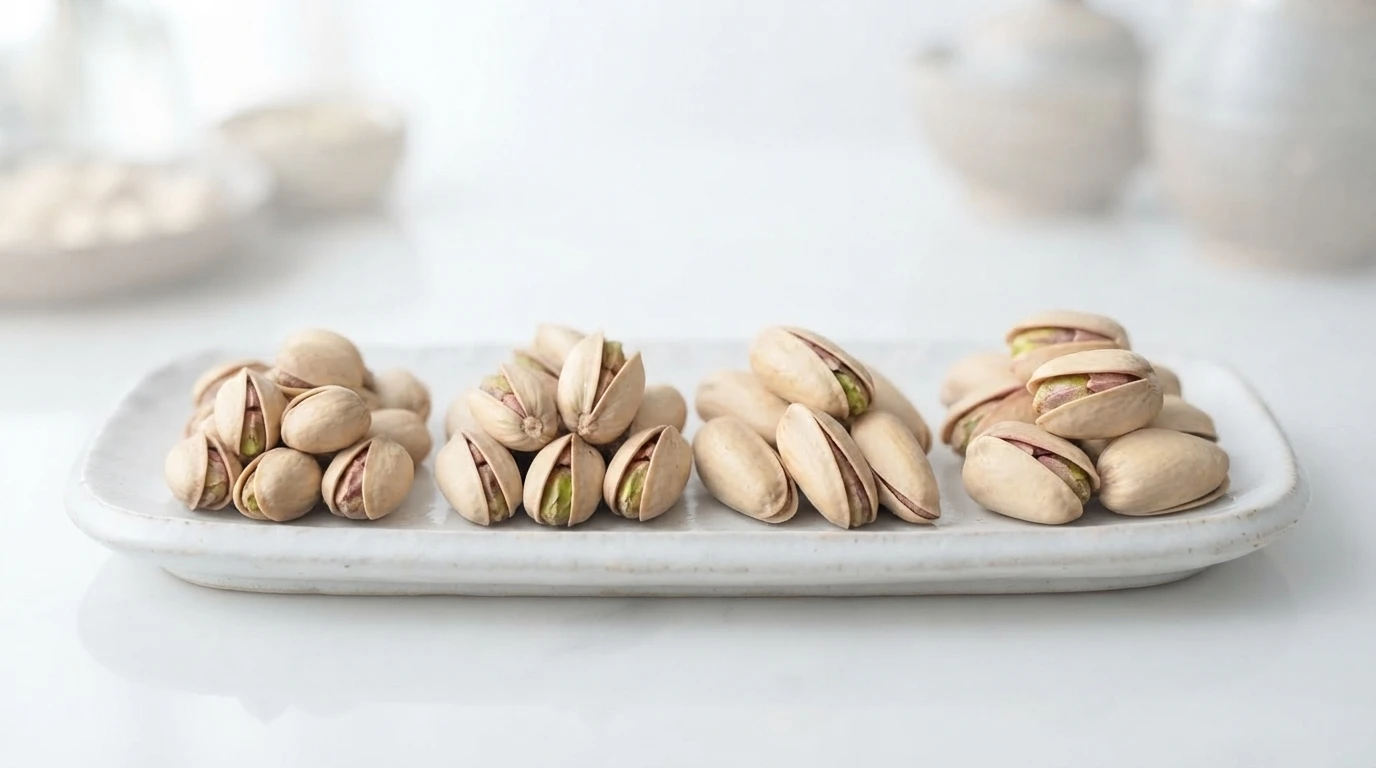
Green Pistachio Kernels in Bulk: What Confectioners Should Specify
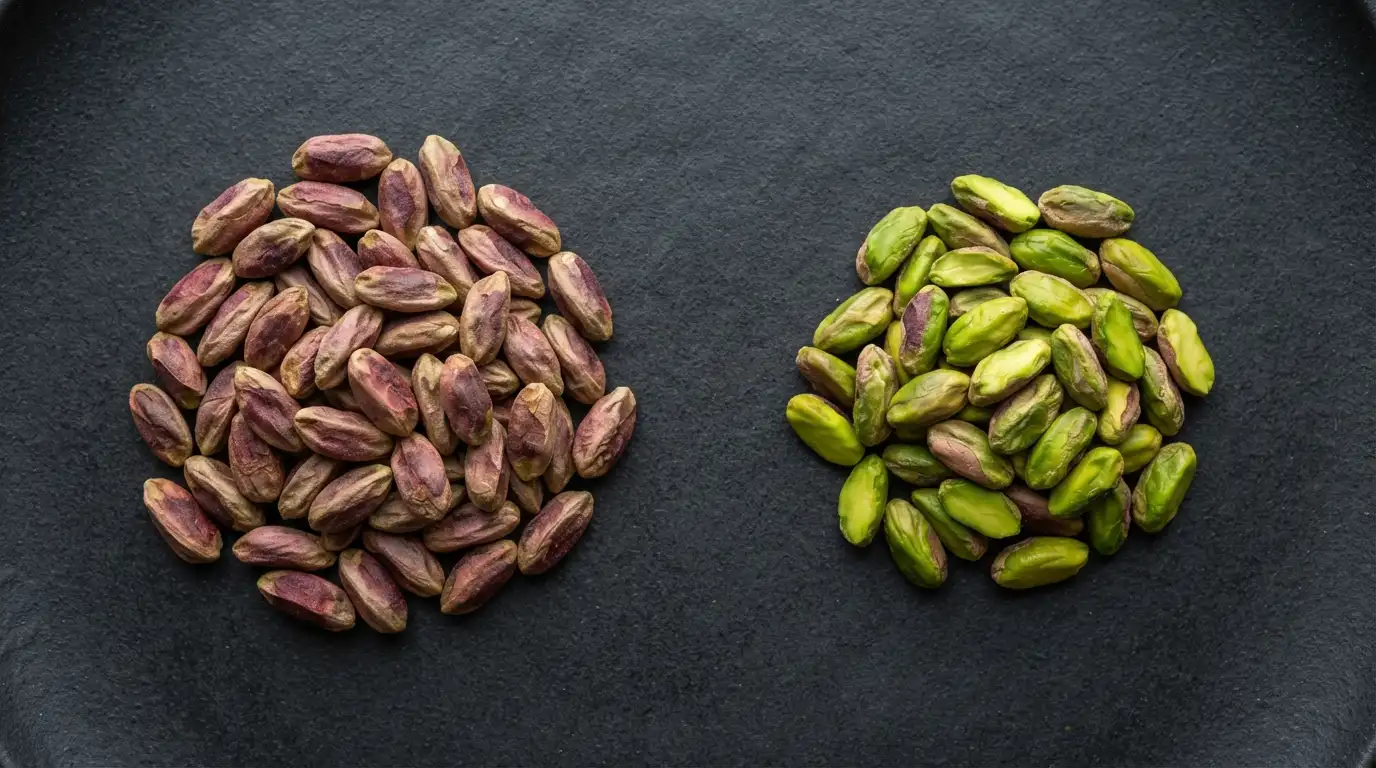
In the kernel trade, colour is the currency. A pastry kitchen will forgive a slightly smaller kernel; it will not forgive a dull one. This guide covers what to specify so the green you approve in the sample is the green that arrives.
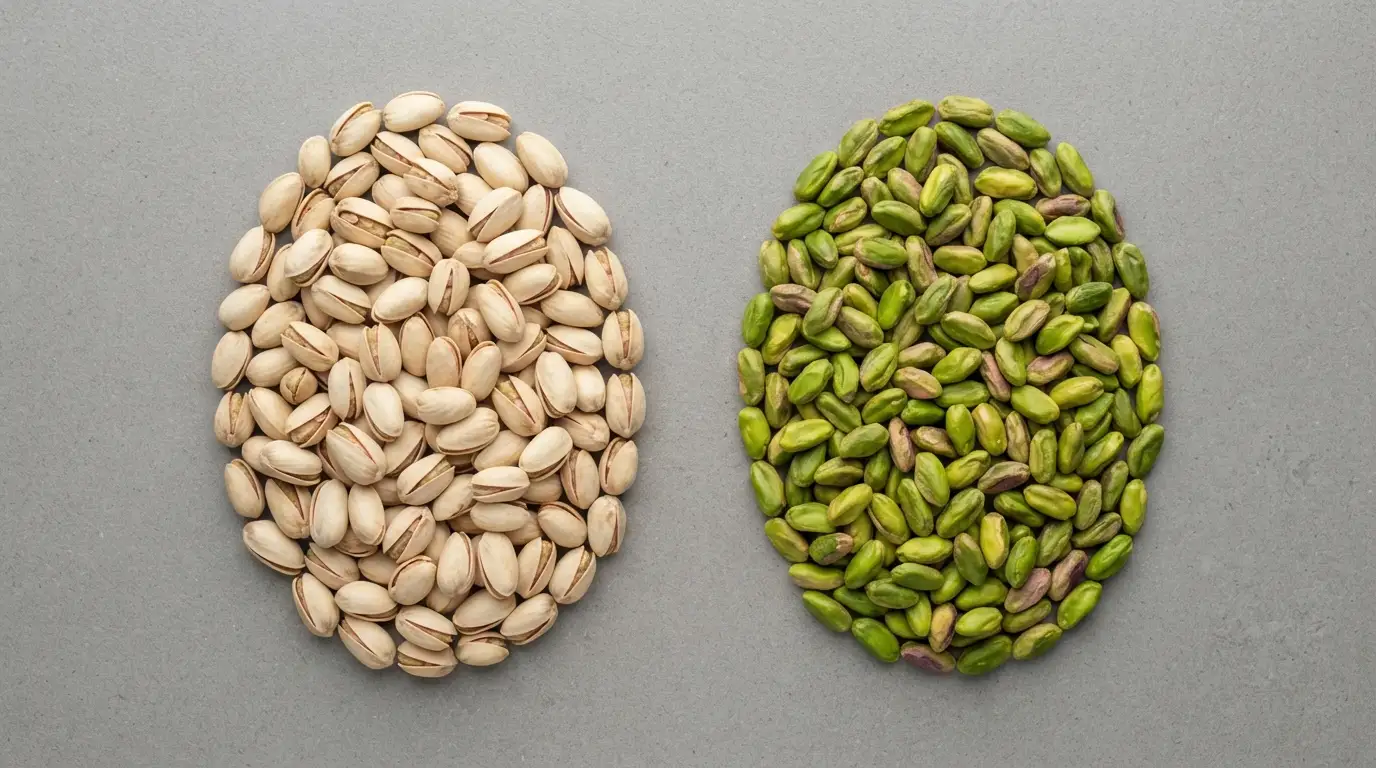
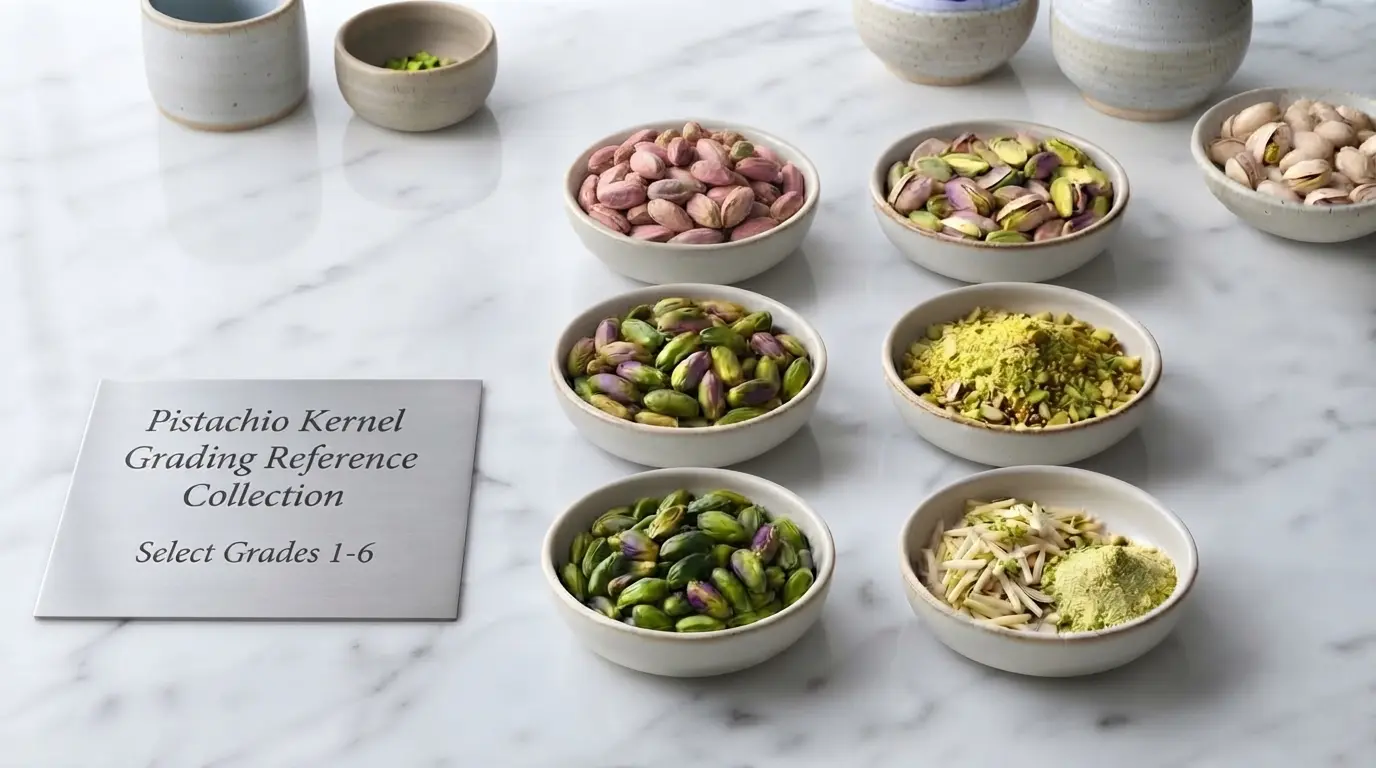
Green peeled pistachio kernels are whole kernels with the thin reddish skin removed — usually by blanching, mechanical peeling and careful re-drying — so the green underneath shows. They are the standard ingredient for baklava, kunafa toppings, nougat, chocolate inclusions and premium ice cream, and they sit at the expensive end of the six kernel grades.
If you are new to buying pistachios by volume, start with our wholesale checklist for Gulf distributors; this article goes one level deeper on the green kernel itself.
Three greens, three prices
Buyers often ask for "green pistachio" as if it were one product. In practice there are three, and they are priced very differently.
Green kernel types
Type | What it is | Typical use |
|---|---|---|
Whole natural kernel | Skin left on; green shows only when cut | Snacks, bakery where the kernel is chopped |
Green peeled kernel | Skin removed by blanching and peeling, then re-dried | Baklava, kunafa, nougat, decoration |
Early-picked kernel (kal / boz) | Harvested before full maturity for maximum chlorophyll | Luxury pastry, pistachio paste and cream, premium gelato |
Early-picked kernel is the most expensive because the grower gives up yield to capture colour — an immature kernel weighs less than it would at harvest. If someone offers deep-green kernel at close to ordinary peeled-kernel prices, ask where the colour is coming from.
Where the green actually comes from
The green is chlorophyll, and chlorophyll fades with maturity, heat and time. So the colour in your carton was decided by three things upstream of you: when the crop was picked, how gently it was dried after peeling, and how long and how warm it has been stored since. A supplier who can talk specifically about all three is describing a process. One who only says "our kernels are very green" is describing a photograph.
Colour is hard to write down and easy to compare. The most reliable protection is a sealed retained sample: approve a sample, keep half, and settle any colour question against it.
The five lines that protect you
Grade and whole-kernel percentage. "Green peeled whole kernels, minimum 85% whole by weight" stops a lot of halves arriving as "kernels".
Colour against a retained sample. Named in the contract, kept by both sides.
Moisture on the finished, packed product. Blanching puts moisture back in; if re-drying is rushed, kernels arrive soft and the shelf life collapses. A widely used reference is the US standard, where a lot described as "very well dried" must not exceed 7% average moisture.
Aflatoxin limit and a lot-specific certificate. Under EU rules, pistachios placed on the market for the final consumer may not exceed 8.0 µg/kg aflatoxin B1 and 10.0 µg/kg total aflatoxins — many buyers outside Europe use the same figures as their benchmark.
Packing. Vacuum-packed bricks of about 10–12.5 kg in export cartons are the norm; nitrogen flushing is worth asking for on premium grades.
Formats: whole, halves, slivers, powder
Green kernel is sold in several cuts. Whole kernels decorate; halves give visible pieces at lower cost; slivers (mabshour) finish cakes and pastries; powder (mathoun) goes into fillings, doughs and ice-cream bases. Which format suits which product is covered in ground vs slivered pistachios, and the use of each in Arab sweets in pistachios for baklava and kunafa.
Storage: the part buyers underestimate
Peeled kernel has lost the shell and the skin, the two things that protected it from light and oxygen. Keep it cool and dark, keep bricks sealed until use, and move it through the chain faster than in-shell stock. A container of green kernel standing on a hot quay in summer is losing colour every day it waits; for premium grades, a temperature-controlled leg is money well spent.
A realistic buying sequence
Ask for two or three samples of different colour levels, test them in your own recipe, approve one and seal a retained half. Then order a first lot sized to your real monthly usage rather than to the best price break — green kernel is not a product to stockpile. Price differences between offers usually trace back to grade, colour level and whole-kernel percentage; the broader picture is in what sets the wholesale price of pistachios, and the full order sequence in from sample to container.
Questions buyers ask
What is the difference between green peeled and ordinary pistachio kernels?
Ordinary whole kernels keep their thin reddish skin. Green peeled kernels have been blanched and mechanically peeled to show the green kernel underneath, then re-dried. The peeling adds cost, and the colour is what the buyer pays for.
Why are some green pistachio kernels much more expensive?
Early-picked kernels are harvested before full maturity to capture maximum chlorophyll. The grower gives up weight and yield to get that colour, and drying must be gentler, so the price is higher.
How should green pistachio kernels be stored?
Cool, dark and sealed. Keep vacuum bricks closed until use and avoid heat during transit and storage, because heat and light fade the green and speed up rancidity.
What moisture level should green pistachio kernels have?
Ask for the moisture measured on the finished packed product. A common reference is the US standard, where very well dried kernels must not exceed 7% average moisture.
Can I order green kernels together with in-shell pistachios in one container?
Yes. Mixed containers are common; list each product as a separate line with its own specification and net weight, and ask for pallets to be marked by line.
Supplying a pastry or ice-cream business?
See our pistachio kernels or request samples and a quote. Tell us what you make and your monthly usage, and we will suggest a grade.